Whether you’re an international traveler planning your first trip to Pakistan or a Pakistani eager to explore your country’s rich heritage, discovering the best historical places in Pakistan can encounter the same challenge: there is simply too much to see.
From ancient civilizations and Buddhist archaeological sites to Mughal forts, Sufi shrines, royal palaces, and UNESCO World Heritage Sites, Pakistan is home to thousands of years of history spread across a remarkably diverse landscape. For first-time visitors, deciding where to go can feel overwhelming.
A question we hear often is:
“If I visit Pakistan for the first time, which historical places should I see to understand the country’s complete history?”
The answer is simpler than most people expect.
You do not need to visit every historical landmark in Pakistan to understand its story. By following a carefully planned route through a handful of key destinations, you can experience the major civilizations, empires, religions, cultures, and traditions that shaped the nation over more than 5,000 years.
This guide presents the easiest and most practical Pakistan heritage tour for first-time visitors. The route focuses on major destinations connected by airports and reliable road networks, making it ideal for international travelers looking for a seamless cultural tour of Pakistan.
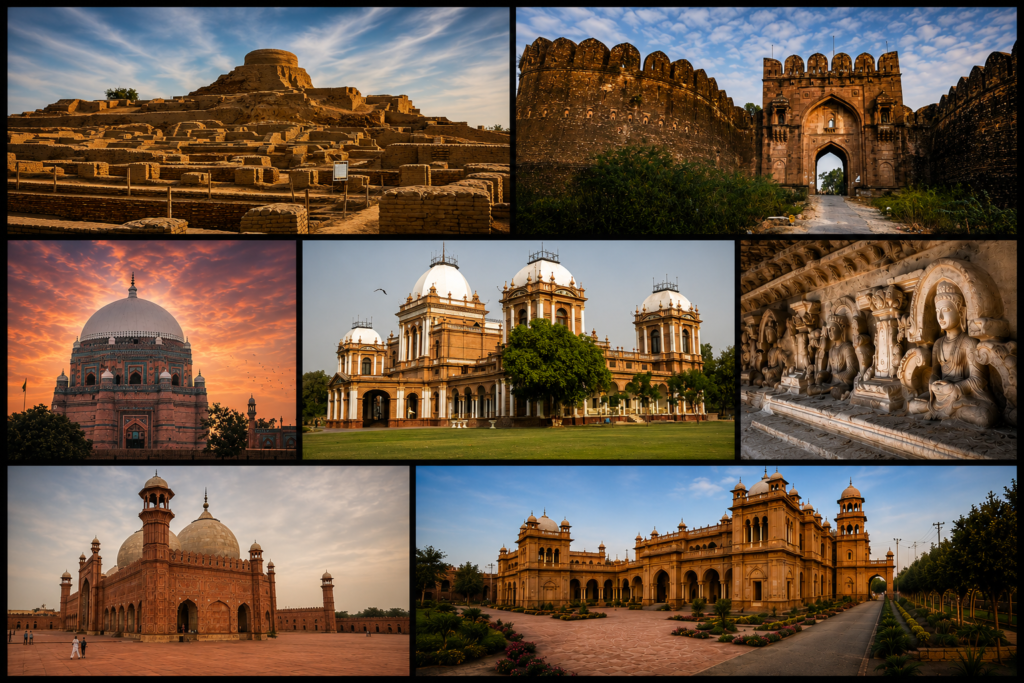
Together, these seven destinations tell the story of Pakistan through its most important historical chapters. From the Buddhist centers of Gandhara and the trade routes of the Silk Road to Mughal grandeur, Sufi traditions, royal desert kingdoms, and the ancient world of the Indus Valley Civilization, this journey offers one of the most complete introductions to Pakistan’s heritage.
If you are searching for the best historical places in Pakistan and want to understand the country’s past in a single trip, this route is the perfect place to start.
Why This Route Works for First-Time Visitors
Many travel guides list dozens of attractions without explaining how they connect to Pakistan’s broader historical narrative.
This guide takes a different approach.
Instead of focusing on monuments alone, it focuses on the key historical eras that shaped Pakistan.
| Destination | Represents |
| Taxila | Gandhara Civilization and Buddhist Heritage |
| Peshawar | Silk Road and Central Asian Influences |
| Rohtas Fort | Medieval Military Architecture |
| Lahore | Mughal, Sikh, and British Colonial Heritage |
| Multan | Islamic Civilization and Sufi Heritage |
| Bahawalpur | Desert Kingdoms and the Abbasi Nawabs |
| Mohenjo-daro | Indus Valley Civilization |
Combined, these destinations create one of the most rewarding experiences for anyone interested in historical tourism in Pakistan.
1. Taxila: Where Ancient Knowledge Shaped a Civilization
Most international travelers arrive in Pakistan through Islamabad, making Taxila the ideal first stop on this journey.
Long before Oxford, Cambridge, or Harvard existed, students and scholars were already traveling across Asia to learn in Taxila.
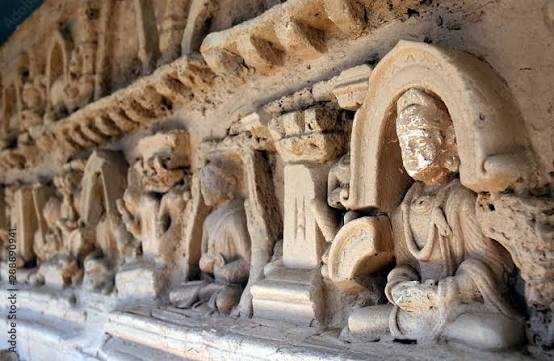
Located just outside Islamabad, Taxila was one of the ancient world’s greatest centers of learning. It flourished as part of the Gandhara Civilization and became a meeting point for cultures, ideas, religions, and trade routes.
Standing among the ancient monasteries, stupas, and archaeological ruins, it is easy to imagine why monks, philosophers, and merchants traveled thousands of kilometers to study here. Taxila was not just a city. It was a center of intellectual exchange that connected civilizations across Asia.
Today, visitors can explore remarkably preserved ruins and museums that reveal the region’s Buddhist heritage and its role in shaping the cultural history of South Asia.
As one of the most important UNESCO World Heritage Sites in Pakistan, Taxila offers the perfect introduction to the country’s rich and diverse past.
Why Visit Taxila?
- UNESCO World Heritage Site
- Ancient Buddhist heritage
- Gandhara Civilization
- Archaeological museums and ruins
- Easy access from Islamabad International Airport
From the Buddhist monasteries of Taxila, the journey continues west to Peshawar, where Pakistan’s story shifts from education and philosophy to trade, migration, and cultural exchange.
2. Peshawar: Where Civilizations Crossed Paths
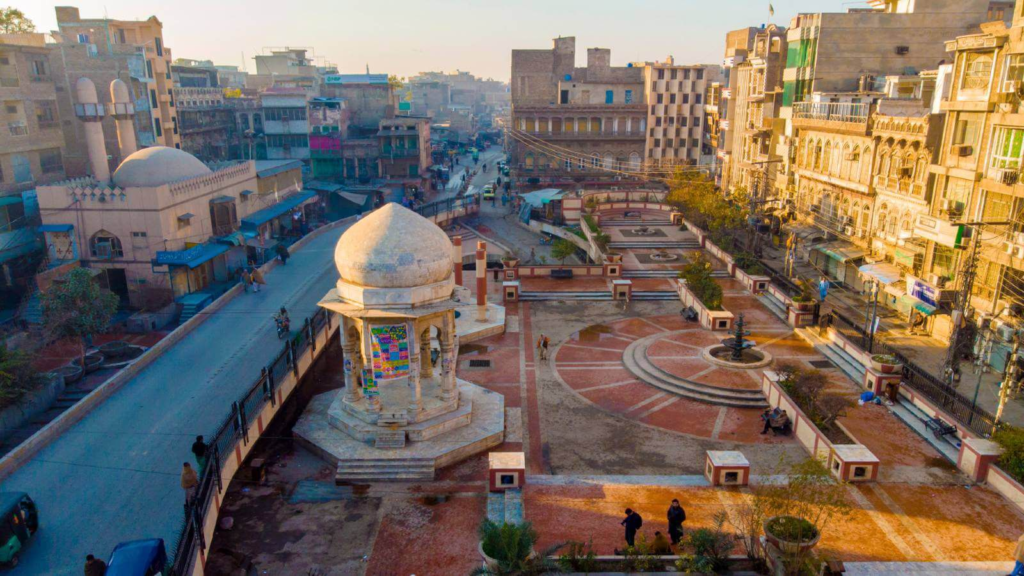
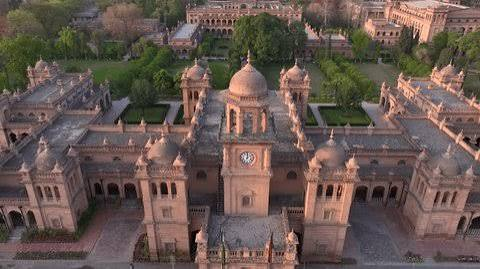
If cities could tell stories, Peshawar would speak in dozens of languages gathered from centuries of traders, travelers, and conquerors passing along the Silk Road.
One of the oldest cities in South Asia, Peshawar occupied a strategic position connecting Central Asia, South Asia, China, and the Middle East. For centuries, merchants carried goods through its markets while scholars exchanged ideas and empires competed for influence.
Walking through Peshawar today, visitors can still feel the legacy of those centuries of movement and exchange. The city’s culture, architecture, cuisine, and traditions reflect influences from far beyond Pakistan’s modern borders.
Peshawar helps travelers understand that Pakistan’s history was never isolated. It was shaped by interaction with some of the world’s greatest civilizations.
Why Visit Peshawar?
- Historic Silk Road connections
- Central Asian cultural influences
- One of South Asia’s oldest cities
- Rich trading and migration history
After centuries of trade and cultural exchange in Peshawar, the next chapter takes us into an era defined by military power and strategic control.
3. Rohtas Fort: Built to Intimidate, Designed to Endure
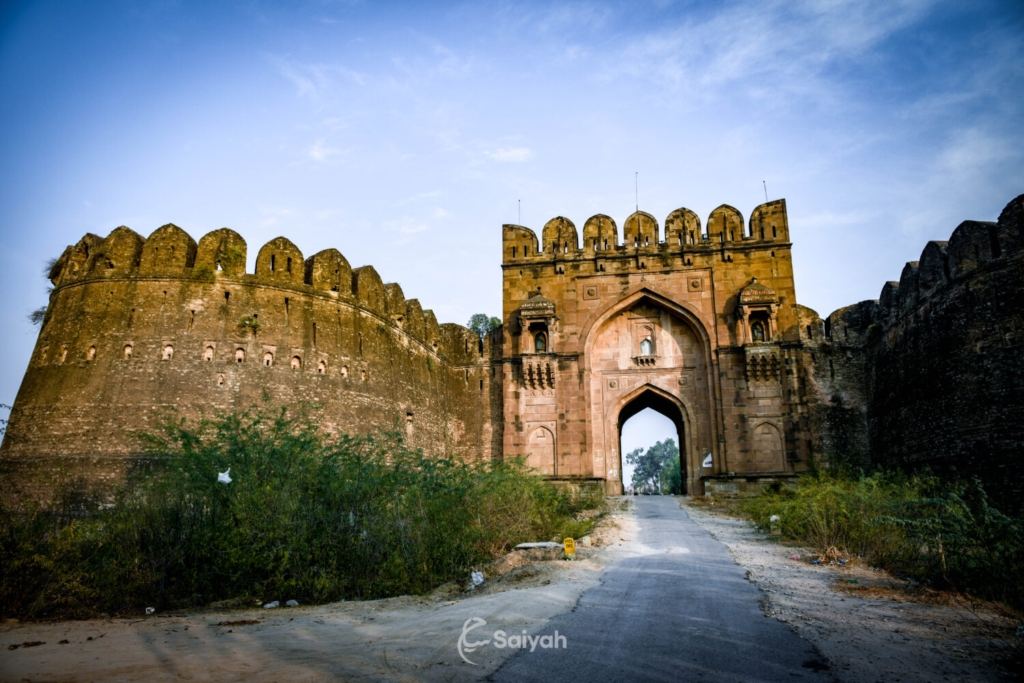
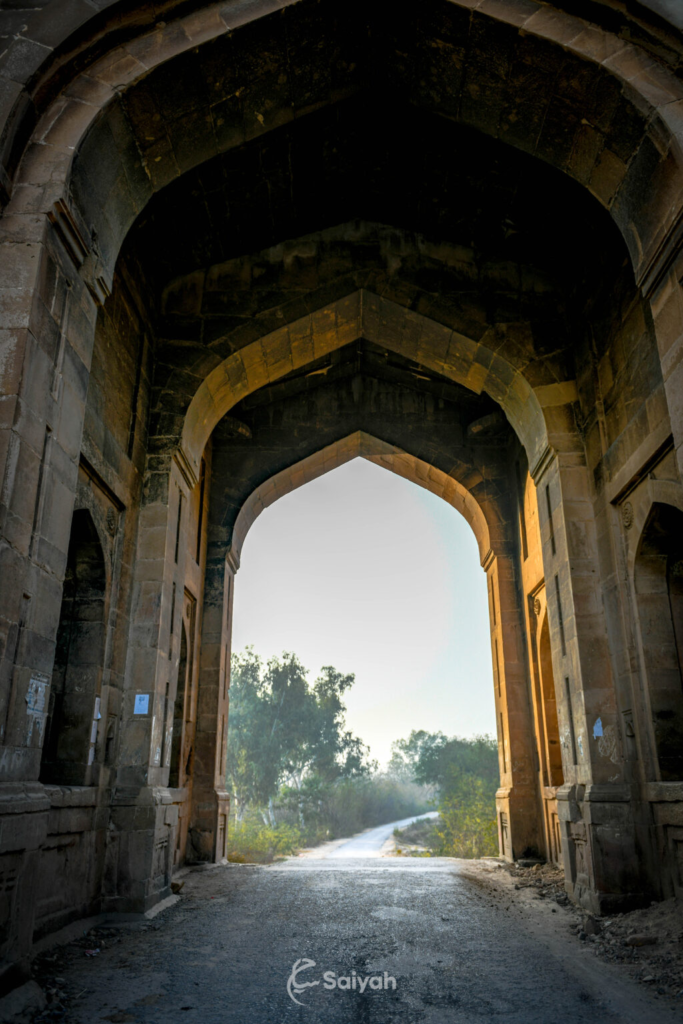
Rohtas Fort was not built to impress visitors. It was built to intimidate enemies.
Constructed during the reign of Sher Shah Suri in the 16th century, this massive fortress remains one of the finest examples of military architecture in South Asia.
Unlike royal palaces designed for luxury and comfort, Rohtas Fort was created for defense. Its enormous walls, strategic gateways, and sophisticated design reveal the military realities of the era.
Standing before its towering structures, visitors quickly understand why this fortress played such an important role in controlling the region.
Today, Rohtas Fort is recognized as one of the most significant UNESCO World Heritage Sites in Pakistan and remains an essential stop for travelers interested in medieval history and architecture.
Why Visit Rohtas Fort?
- UNESCO World Heritage Site
- Exceptional military engineering
- Sur Empire history
- Spectacular architecture and views
From the defensive walls of Rohtas Fort, the story moves toward a city that became a center of culture, art, architecture, and empire.
4. Lahore: The City That Captures Pakistan’s Soul
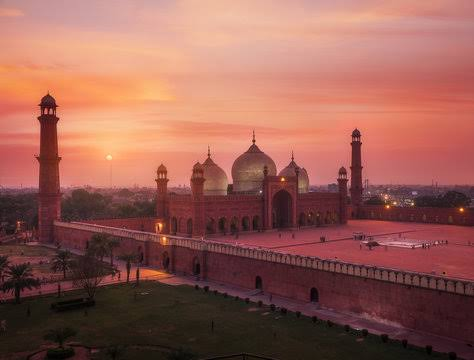
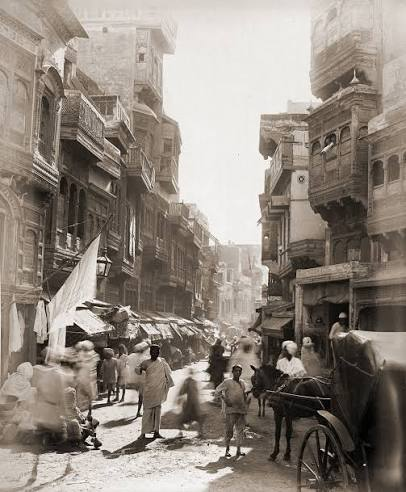
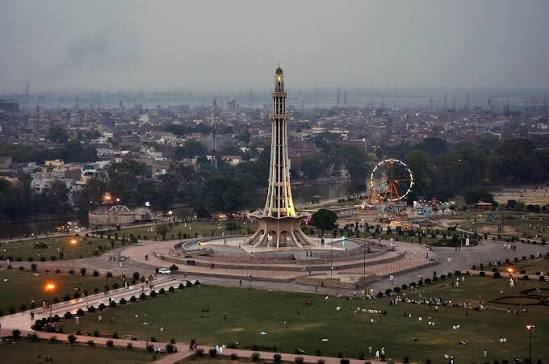
If Pakistan has a soul, many would argue it lives in Lahore.
No other city reflects Pakistan’s historical evolution quite like Lahore. Over the centuries, emperors, rulers, artists, poets, scholars, and merchants have all left their mark here, creating a city where every street seems to tell a different story.
For many travelers, Lahore is not just another destination. It becomes the place where Pakistan’s history feels most alive.
The city’s golden age arrived under the Mughal Empire, which transformed Lahore into one of the most magnificent cities in the world. Their influence can still be seen in some of the country’s most iconic landmarks.
The Lahore Fort stands as one of the greatest achievements of Mughal architecture. Within its walls, visitors can explore royal chambers, courtyards, gardens, and structures that once served as the center of imperial power.
Just across from the fort stands the Badshahi Mosque, one of the largest and most impressive mosques in the world. Its vast courtyard, elegant red sandstone construction, and commanding presence make it one of Pakistan’s most recognizable landmarks.
Beyond these famous monuments lies the Walled City of Lahore, where history comes alive through narrow streets, centuries-old buildings, bustling bazaars, and hidden architectural treasures. Walking through the Walled City feels less like visiting a museum and more like stepping into a living chapter of history.
The Shalimar Gardens offer another glimpse into the sophistication of Mughal design. Created as a royal retreat, the gardens showcase the empire’s mastery of landscape architecture and their appreciation for beauty, symmetry, and water features.
For visitors who want a deeper understanding of the country’s heritage, the Lahore Museum is an essential stop. Its collections span thousands of years and help connect the stories of the civilizations, empires, and cultures that shaped modern Pakistan.
What makes Lahore truly special is not any single monument. It is the way multiple eras coexist in one city. Mughal grandeur, Sikh heritage, British colonial influence, and contemporary Pakistani culture all come together to create an experience unlike anywhere else in the country.
For first-time visitors, Lahore often becomes the highlight of their Pakistan heritage tour.
Why Visit Lahore?
- Lahore Fort
- Badshahi Mosque
- Walled City of Lahore
- Shalimar Gardens
- Lahore Museum
- Mughal, Sikh, and colonial heritage
- Vibrant cultural experiences
From the imperial grandeur of Lahore, the journey continues south to a city known not for power or empire, but for faith.
5. Multan: The City of Saints
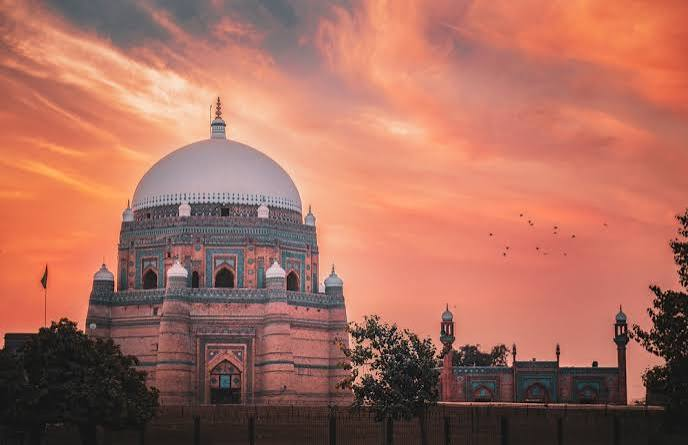
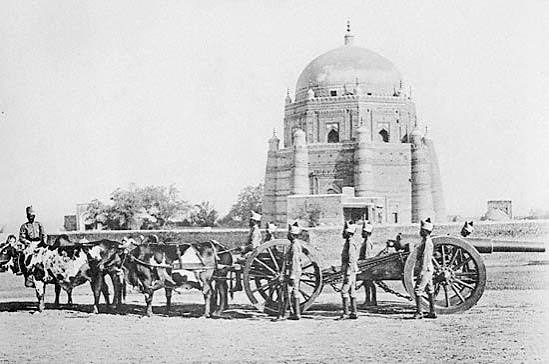
While many cities are remembered for power, Multan is remembered for faith.
Known throughout South Asia as the City of Saints, Multan has served as a center of Islamic scholarship and Sufi traditions for centuries.
Its magnificent shrines dominate the skyline and attract visitors from across the world. These sacred sites are not only architectural landmarks but also symbols of the spiritual traditions that continue to influence Pakistani society today.
Multan tells a story that extends beyond politics and empires. It tells the story of spirituality, learning, and cultural exchange.
The city’s historic neighborhoods, shrines, and traditions provide visitors with a deeper understanding of Pakistan’s religious and cultural heritage.
Why Visit Multan?
- Sufi heritage
- Islamic architecture
- Historic shrines
- Spiritual and cultural significance
From the spiritual heart of Pakistan, the route moves toward a landscape of palaces, desert horizons, and royal history.
6. Bahawalpur: The Kingdom on the Edge of the Desert
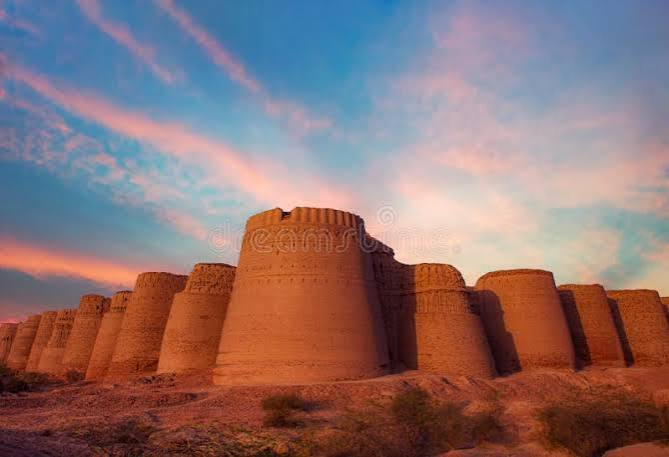
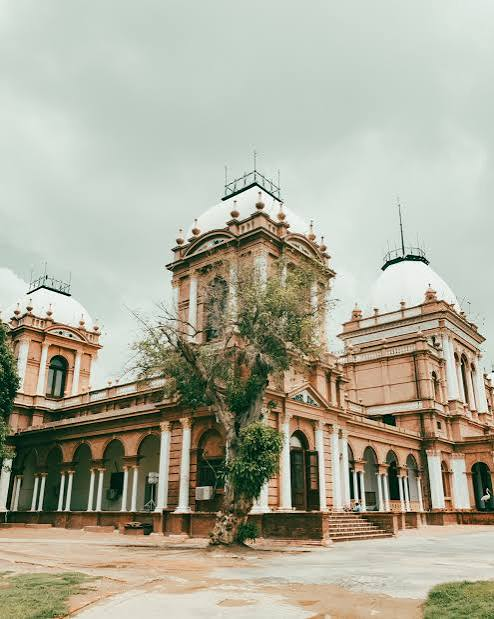
Beyond Pakistan’s bustling cities lies a world of desert palaces, royal courts, and stories of a kingdom that once thrived on the edge of the Cholistan Desert.
Bahawalpur was ruled by the Abbasi Nawabs and became one of the most influential princely states in the region.
The city’s grand palaces and historic buildings reveal a chapter of history often overlooked by international visitors. Here, travelers discover a legacy shaped by royal patronage, desert trade routes, and unique cultural traditions.
The nearby Cholistan Desert adds another dimension to the experience, offering a glimpse into a landscape that has shaped local life for centuries.
For travelers looking to go beyond the usual tourist trail, Bahawalpur provides one of the most distinctive cultural experiences in Pakistan.
Why Visit Bahawalpur?
- Royal palaces
- Abbasi Nawab heritage
- Desert culture
- Unique architectural landmarks
The final destination takes us back thousands of years to the very beginning of Pakistan’s story.
7. Mohenjo-daro: Where Pakistan’s Story Began
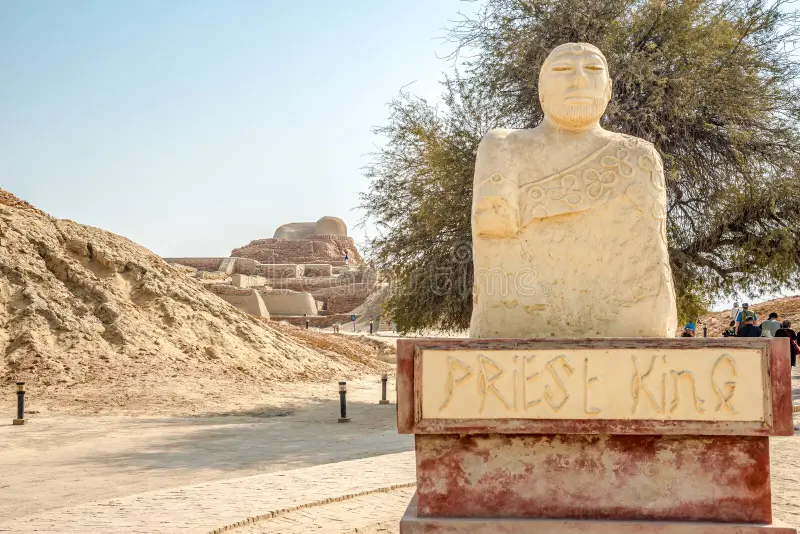
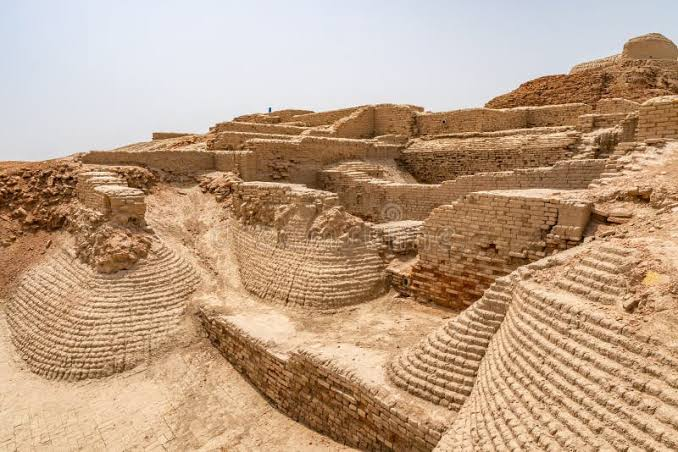
Before the pyramids were ancient history and before Rome existed, the streets of Mohenjo-daro were already alive with merchants, craftsmen, and city planners.
Dating back more than 4,500 years, Mohenjo-daro was one of the largest cities of the Indus Valley Civilization and remains one of the world’s most extraordinary archaeological sites.
Its carefully planned streets, advanced drainage systems, and sophisticated urban design demonstrate a level of development that continues to impress historians today.
Walking through the ruins creates a powerful sense of perspective. Visitors quickly realize that Pakistan’s story stretches back thousands of years, making it home to one of humanity’s earliest urban civilizations.
Ending this journey at Mohenjo-daro brings everything together. After exploring Buddhist centers, Silk Road cities, Mughal capitals, Sufi shrines, and royal kingdoms, travelers arrive at the foundation upon which much of the region’s history was built.
Why Visit Mohenjo-daro?
- UNESCO World Heritage Site
- Indus Valley Civilization
- One of the world’s oldest cities
- Exceptional archaeological significance
The Complete Story of Pakistan in One Journey
By following this route, travelers experience the major chapters of Pakistan’s history in a logical and accessible way:
- Gandhara Civilization in Taxila
- Silk Road heritage in Peshawar
- Medieval military architecture at Rohtas Fort
- Mughal, Sikh, and colonial history in Lahore
- Islamic and Sufi traditions in Multan
- Royal desert heritage in Bahawalpur
- Ancient civilization in Mohenjo-daro
Few countries offer such a diverse historical experience within a single journey.
From Buddhist monasteries and Silk Road trading centers to Mughal architecture, Sufi shrines, royal palaces, and ancient urban civilizations, these destinations represent the very best of historical tourism in Pakistan.
Explore Pakistan’s History with Saiyah Travels
History is rarely found in monuments alone. It lives in the stories behind them, the civilizations that built them, the people who protected them, and the cultures that continue to shape them today.
That is exactly what a well-planned cultural tour of Pakistan should do: connect the stories, not just the locations.
At Saiyah Travels, our journeys are designed to help travelers experience the country’s most important historical destinations in a way that feels meaningful, comfortable, and connected. From UNESCO World Heritage Sites in Pakistan to royal palaces, ancient cities, and spiritual landmarks, we help bring Pakistan’s story to life.
Ready to discover Pakistan’s story?
Contact Saiyah Travels and explore the historical places, cultural treasures, and timeless heritage that make Pakistan one of the world’s most fascinating destinations.
Frequently Asked Questions About Historical Places in Pakistan
What are the most important historical places to visit in Pakistan?
The most important historical places in Pakistan include Taxila, Peshawar, Rohtas Fort, Lahore, Multan, Bahawalpur, and Mohenjo-daro. Together, these destinations represent the country’s Buddhist, Islamic, Mughal, colonial, royal, and ancient Indus Valley heritage.
Can I explore Pakistan’s history in a single trip?
Yes. A carefully planned itinerary covering Taxila, Peshawar, Rohtas Fort, Lahore, Multan, Bahawalpur, and Mohenjo-daro allows travelers to experience more than 5,000 years of history in one journey.
What is the best historical tour route in Pakistan for first-time visitors?
Many travelers begin in Islamabad and Taxila before continuing to Peshawar, Rohtas Fort, Lahore, Multan, Bahawalpur, and Mohenjo-daro. This route is well connected by airports and major road networks, making it practical for international visitors.
Which UNESCO World Heritage Sites in Pakistan should I visit?
Some of Pakistan’s most famous UNESCO World Heritage Sites include Taxila, Mohenjo-daro, Rohtas Fort, Lahore Fort, and Shalimar Gardens. These sites showcase different eras of the country’s rich historical and cultural heritage.
Why is Taxila one of the most important historical sites in Pakistan?
Taxila was one of the ancient world’s leading centers of learning and played a major role in the Gandhara Civilization. It is renowned for its Buddhist heritage, archaeological ruins, monasteries, and cultural significance.
What makes Peshawar significant in the history of the Silk Road?
Peshawar served as a major crossroads connecting South Asia, Central Asia, China, and the Middle East. For centuries, merchants, travelers, and scholars passed through the city, making it one of the most culturally diverse historical centers in the region.
Why is Rohtas Fort considered one of Pakistan’s greatest forts?
Built by Sher Shah Suri in the 16th century, Rohtas Fort is a masterpiece of military engineering. Its massive defensive walls, strategic design, and historical importance earned it recognition as a UNESCO World Heritage Site.
What are the must-visit historical attractions in Lahore?
Lahore’s most famous historical attractions include Lahore Fort, Badshahi Mosque, the Walled City of Lahore, Shalimar Gardens, and the Lahore Museum. These landmarks showcase the city’s Mughal, Sikh, and colonial heritage.
Why is Lahore considered the cultural heart of Pakistan?
Lahore combines centuries of history, architecture, literature, art, and cuisine in one city. Its unique blend of Mughal grandeur, Sikh heritage, colonial architecture, and modern culture makes it one of Pakistan’s most iconic destinations.
Why is Multan known as the City of Saints?
Multan earned this title because it has been a center of Islamic scholarship and Sufi traditions for centuries. The city is home to numerous shrines, spiritual landmarks, and historic sites that attract visitors from around the world.
What can travelers discover in Bahawalpur’s royal heritage?
Bahawalpur offers a glimpse into the history of the Abbasi Nawabs through its palaces, historic buildings, and cultural traditions. The city also provides access to the unique landscapes of the Cholistan Desert.
Why is Mohenjo-daro one of the world’s most important archaeological sites?
Mohenjo-daro was one of the largest cities of the Indus Valley Civilization and dates back more than 4,500 years. Its advanced urban planning, drainage systems, and architecture make it one of humanity’s earliest examples of organized city life.
How many days do I need to visit Pakistan’s top historical places?
Most travelers can comfortably explore Pakistan’s major historical destinations in 10 to 14 days, depending on their itinerary, travel style, and interest in cultural experiences.
Is Pakistan safe for cultural and heritage tourism?
Many of Pakistan’s major historical destinations are regularly visited by both domestic and international travelers. Visitors should stay informed about local travel guidelines and work with experienced tour operators for a smooth experience.
What is the best time to visit historical places in Pakistan?
The best time to explore historical places in Pakistan is generally between October and March when temperatures are cooler and more comfortable for sightseeing across most regions of the country.