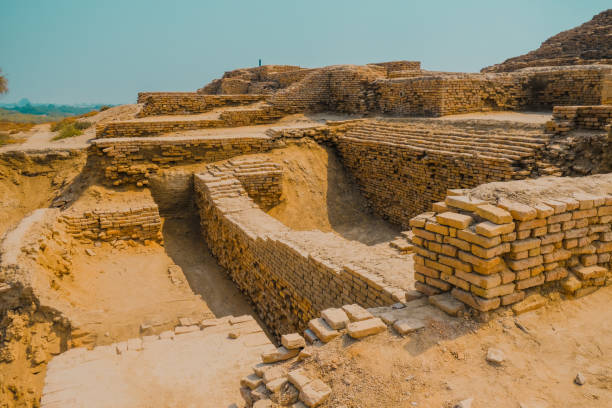
Long before Rome built its roads or Egypt raised its pyramids, one of the world’s most sophisticated urban civilizations was already thriving quietly and methodically in what is now Pakistan.
Harappa, located in present-day Punjab, was one of the great urban centers of the Indus Valley Civilization. It belonged to a world that left behind no grand royal inscriptions, no named kings, and no monuments celebrating individual power. Instead, it left something far more remarkable: a city built on systems.
Organized streets, advanced drainage, standardized materials, and regulated trade defined Harappa. It was not a civilization of spectacle. It was a civilization of function.
For over three thousand years, it remained buried beneath the earth. When it was rediscovered, it did not just reveal a lost city. It rewrote the story of early human civilization.
Where Is Harappa Located?
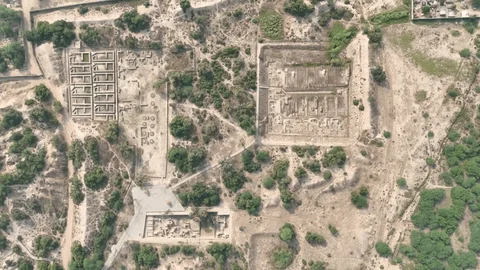
Harappa lies in the Sahiwal District of Punjab, Pakistan, approximately 24 kilometers west of Sahiwal city. It takes its name from a nearby village, located less than a kilometer from the archaeological site.
The city originally stood along the Ravi River, which once flowed close to the settlement and sustained its agriculture, trade, and daily life. Today, the river runs about 8 kilometers north of the site, a shift that likely played a role in the city’s eventual decline.
This region forms part of the fertile alluvial plains of Punjab, enriched over centuries by Himalayan river systems. That agricultural richness was the foundation that made large-scale urban life at Harappa possible.
Discovery of Harappa: From Brick Quarry to Global Breakthrough
- In 1826, Charles Masson first recorded the site’s large brick mounds
- In 1857, railway engineers unknowingly destroyed large portions of the city
- In 1921, Daya Ram Sahni began the first formal excavations
- By 1924, John Marshall announced the discovery of a new civilization
Later work by HARP revealed craft zones, script evolution, fortified walls, and long-term urban continuity, fundamentally reshaping how Harappa is understood today.
The Indus Valley Civilization: A Vast Urban Network
Geographical Scale and Extent
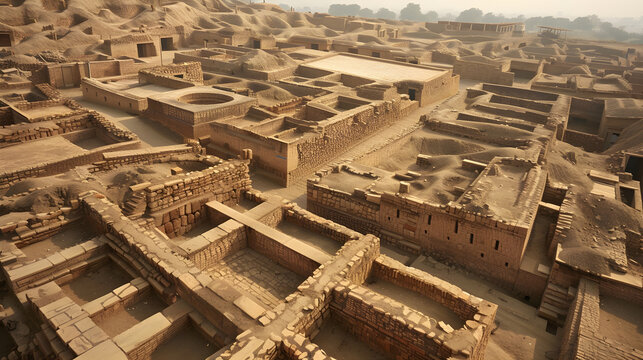
The Indus Valley Civilization was one of the largest Bronze Age civilizations in the world, covering roughly 800,000 to over 1 million square kilometers at its peak. This made it more expansive than both ancient Egypt and Mesopotamia combined. Its influence stretched across modern Pakistan, northwestern India, and into parts of Afghanistan, forming a vast cultural and economic network rather than a single centralized empire.
Urban Centers and Regional Integration
Harappa was one of several major cities within this network, alongside Mohenjo-daro, Dholavira, Rakhigarhi, and Ganeriwala. These cities were not isolated hubs but part of an interconnected system linked through trade, shared technologies, and consistent urban planning principles. The uniformity of brick sizes, weights, and material culture across such a large area suggests strong cultural cohesion without clear evidence of centralized political control.
Systems Over Monuments
Unlike Egypt or Mesopotamia, the Indus Civilization did not prioritize monumental architecture celebrating rulers or deities. Instead, it invested in infrastructure such as drainage, standardized construction, and organized urban layouts. This reflects a fundamentally different model of civilization, one built on coordination and civic efficiency rather than visible displays of power.
Chronology and Development
| Phase | Time Period | Characteristics |
| Early Harappan | 3300–2600 BCE | Farming villages, early pottery, trade beginnings |
| Mature Harappan | 2600–1900 BCE | Urban peak, planning, drainage, trade networks |
| Late Harappan | 1900–1300 BCE | Gradual decline, dispersal, regional cultures |
Scale and Population
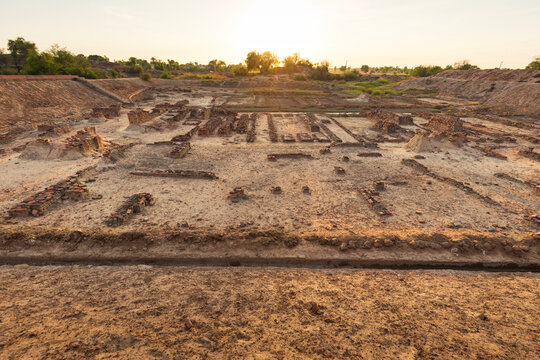
Harappa covered approximately 150 hectares, making it one of the largest cities of its time.
The most widely accepted estimate places the population at around 23,500 to 25,000 people during its peak. Some broader estimates suggest higher numbers (up to 40,000 or more), but these likely include surrounding settlements, seasonal populations, and trade activity.
Regardless of exact figures, Harappa was a major urban center capable of sustaining a large population through agriculture, trade, and organized infrastructure.
City Planning and Urban Design
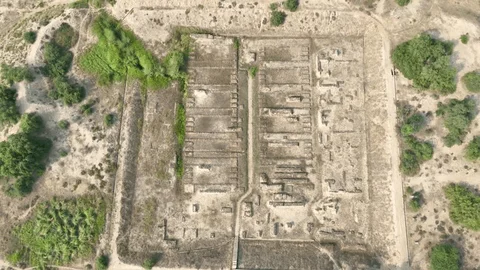
Harappa was not a city that grew randomly—it was deliberately planned.
The settlement was divided into distinct mounds:
- Mound AB (Citadel): administrative or communal functions
- Mound E: dense residential area with fortifications
- Mound F: storage platforms and Cemetery R-37
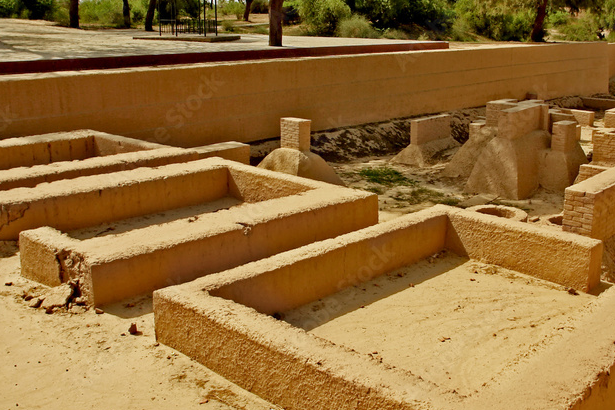
Streets followed a grid-like system aligned with cardinal directions. Houses were built using standardized baked bricks in a 1:2:4 ratio—consistent across the entire civilization.
What stands out is not just planning, but consistency. Across centuries and across regions, Harappans maintained the same construction logic—evidence of strong shared knowledge rather than centralized control.
Water and Sanitation Systems
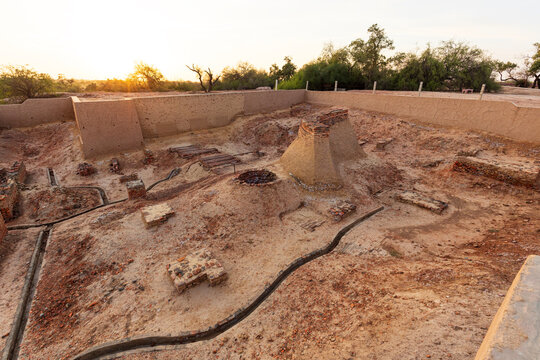
Advanced Drainage Infrastructure
Harappa’s drainage system represents one of the earliest known examples of organized urban sanitation. Covered brick drains ran beneath streets, carrying wastewater away from homes. These drains were carefully constructed with inspection openings, allowing maintenance and cleaning. This level of planning indicates that sanitation was not an afterthought but a core component of urban design.
Household Water Management
Many houses were equipped with private wells, allowing residents direct access to clean water. Wastewater from bathing platforms and latrines was channeled into the drainage network. This decentralized system ensured that water access was widespread rather than restricted to elite areas.
Public Health and Urban Logic
The integration of water supply and waste removal reflects a sophisticated understanding of hygiene. Compared to other ancient civilizations, Harappa’s sanitation systems stand out for their scale, accessibility, and engineering precision, showing that urban health was a shared priority across the population.
Economy and Trade Networks
Agricultural Foundation
Harappa’s economy was rooted in agriculture, supported by fertile plains and seasonal river systems. Crops such as wheat, barley, rice, and cotton formed the backbone of production. Cotton, in particular, highlights Harappa’s role as one of the earliest textile-producing cultures.
Long-Distance Trade Connections
Trade extended far beyond the Indus region. Harappan merchants interacted with Mesopotamia, where the region was known as Meluhha. Goods such as carnelian beads, lapis lazuli, metals, and textiles moved across long-distance trade routes linking South Asia with the Persian Gulf and beyond.
Standardized Systems of Exchange
Trade relied on a highly organized system of weights and measures. Stone weights followed consistent ratios, ensuring uniformity across regions. This standardization enabled reliable transactions and reflects a regulated economic system operating across vast distances.
Craft Production and Industry
Harappa was also an industrial center, with production embedded within neighborhoods.
Key industries included:
- Bead-making (carnelian, faience)
- Copper and bronze tools
- Pottery and ceramics
- Shell and ivory carving
- Textile production
Faience beads, some smaller than a millimeter, highlight extraordinary craftsmanship. Micro-drilling techniques used in bead production remain impressive even by modern standards.
Seals and the Harappan Script
Design and Symbolism of Seals
Harappan seals are typically small, square objects carved from steatite and fired to create a durable surface. They often feature animal motifs, with the unicorn being the most common. These images were likely symbolic and may have represented identity, authority, or belief systems.
Function in Trade and Administration
Seals were used to stamp goods, mark ownership, and secure trade shipments. Their presence in Mesopotamia confirms their role in long-distance commerce. They acted as identifiers in a system that relied on trust, regulation, and consistency.
The Undeciphered Script
The script associated with these seals consists of around 400 signs and is generally written from right to left. Most inscriptions are very short, limiting the ability of researchers to decode them. Statistical studies suggest the script may be logo-syllabic, combining symbols for sounds and meanings. Despite decades of research, it remains undeciphered, leaving the language and administration of Harappa unknown.
Society: Organized Without Kings
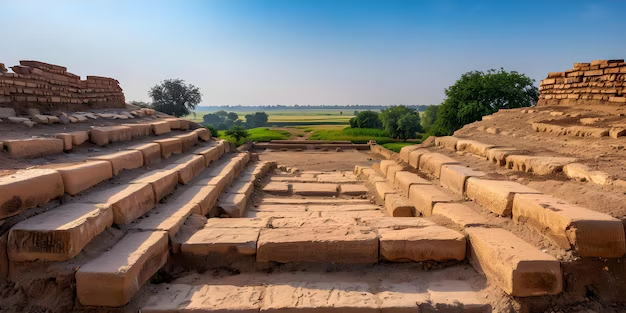
One of Harappa’s most striking features is the absence of clearly identifiable rulers. There are no confirmed palaces, no royal tombs, and no inscriptions that name kings or celebrate individual authority. The overall layout of the city, along with relatively uniform housing and widespread access to infrastructure such as water and drainage, suggests a society that was organized without an obvious centralized display of power.
However, this does not mean that Harappan society was entirely equal. Skeletal studies provide a more complex picture, revealing evidence of diseases such as tuberculosis and leprosy, as well as cranial injuries in certain populations. These findings indicate variations in health, living conditions, and possibly social status across different groups within the city.
Burial evidence further supports this nuanced view. Cemetery R-37, one of the best-studied burial grounds at Harappa, shows relatively modest and consistent graves, without dramatic differences in wealth or status. This suggests that while the society may not have displayed extreme inequality in death, differences likely existed in everyday life, pointing to a structured but not strictly hierarchical social system.
Religion and Symbolism
Material Evidence of Belief Systems
Harappan religion is understood primarily through artifacts rather than written texts. Terracotta figurines, often interpreted as fertility symbols, suggest a focus on themes of life, reproduction, and continuity. Animal imagery, especially on seals, likely held symbolic or ritual significance.
Proto-Shiva Interpretation and Symbolic Figures
One well-known seal depicts a horned figure seated in a posture resembling meditation, surrounded by animals. This figure is often compared to later depictions of Shiva as Pashupati, the lord of animals. While the resemblance is compelling, it remains an interpretation rather than a confirmed identification.
Decentralized Religious Practices
Unlike other ancient civilizations, Harappa does not show clear evidence of large temples or centralized religious institutions. This suggests that belief systems may have been practiced at a household or community level, integrated into daily life rather than organized around monumental structures.
Burial Practices at Cemetery R-37
Burials were simple and consistent, with modest grave goods. This reflects a society without extreme displays of wealth in death.
Harappa Compared to Other Indus Cities
Harappa’s uniqueness becomes clearer when compared with other major sites.
Mohenjo-daro is known for monumental structures like the Great Bath, suggesting stronger ritual emphasis. Harappa, in contrast, shows more evidence of long-term habitation and industrial activity.
Dholavira stands out for its advanced water storage systems, including reservoirs. Harappa’s strength lies in drainage and sanitation.
Rakhigarhi may be the largest site by area, but it is less excavated. Harappa remains one of the most thoroughly studied sites due to decades of research.
Difference Between Harappa and Mohenjo-daro
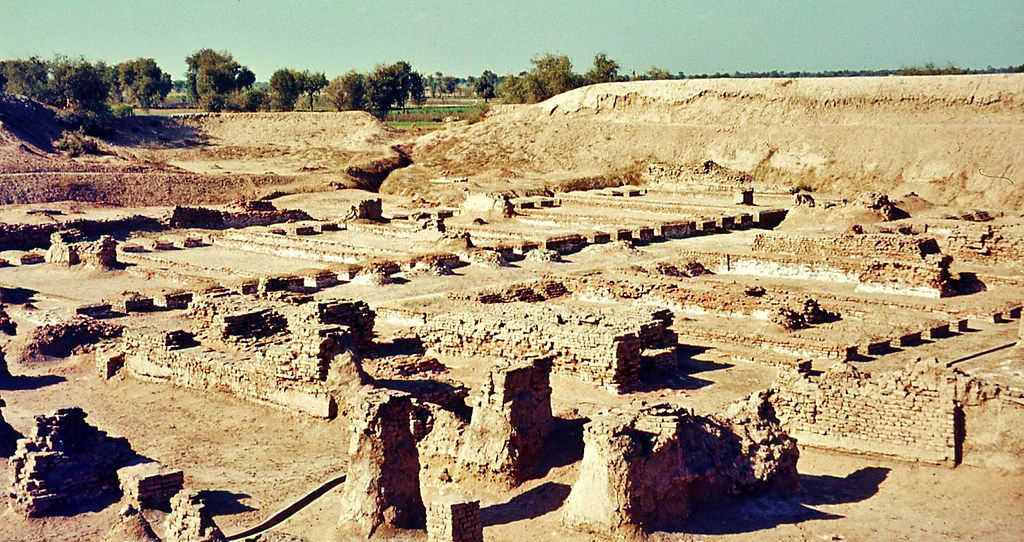
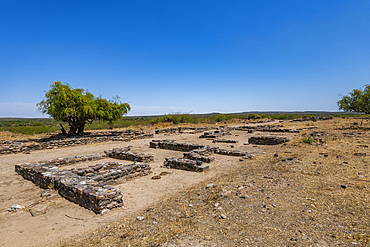
| Feature | Harappa | Mohenjo-daro |
| Location | Punjab (near Ravi River) | Sindh (near Indus River) |
| Character | Industrial and administrative focus | More monumental and ceremonial |
| Key Structure | Granary platforms, craft zones | Great Bath, large public buildings |
| Excavation Depth | Extensively studied (HARP) | Widely excavated earlier |
| Urban Layout | Functional and segmented mounds | More uniform urban spread |
| Symbolism | Less monumental emphasis | Stronger ritual indicators |
The Decline of Harappa
Harappa did not collapse suddenly; it transformed gradually over time.
Recent 2025 studies published in Communications Earth & Environment provide deeper insight into this transition. These studies show that the region experienced multiple prolonged droughts, each lasting more than 85 years, along with rainfall declines of 10 to 20 percent and steadily rising temperatures. At the same time, major river systems became increasingly seasonal, reducing the reliability of water for agriculture and daily life.
Between roughly 4400 and 3400 years ago, these repeated climate stresses placed sustained pressure on the urban system. Populations began shifting toward areas with more dependable water sources, rather than abandoning the region entirely. This process is now described by researchers as a “Harappan metamorphosis,” emphasizing a slow and adaptive transition instead of a sudden collapse.
As rivers like the Ravi gradually changed course and agricultural productivity weakened, the foundations of large urban centers eroded. Harappa and other cities declined in scale, and their populations dispersed into smaller, more localized communities, marking the end of the great urban phase of the Indus Valley Civilization.
Legacy of Harappa
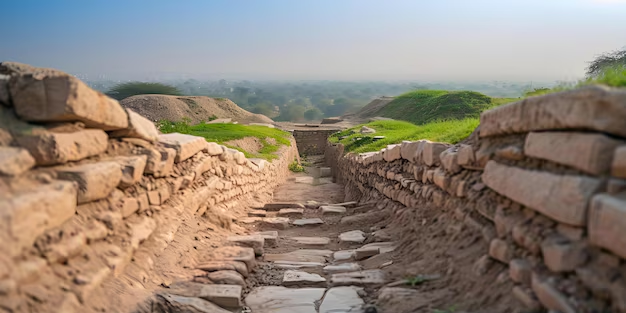
Harappa did not disappear; it evolved over time into new cultural and regional forms.
Its influence can be traced in several enduring aspects of South Asian life. Traditions of water management, including an emphasis on drainage, wells, and controlled water use, reflect principles that were already highly developed in Harappan cities. Craft techniques such as bead-making and pottery also show continuity, with similar styles and methods appearing in later cultures across the region. In addition, patterns of settlement, including the preference for riverine and agriculturally viable landscapes, suggest a lasting connection to Harappan ways of organizing life.
Although direct and unbroken links to later South Asian traditions remain a subject of scholarly debate, Harappa stands as one of the earliest and most sophisticated experiments in planned urban living, shaping the foundations upon which later societies in the region would develop.
Harappa Today: Site, Museum, and Preservation
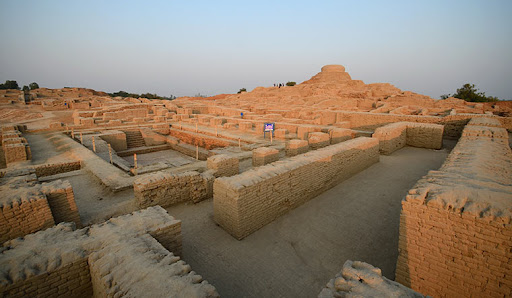
Archaeological Landscape Today
The modern site of Harappa consists of multiple excavated mounds surrounded by areas that remain largely untouched. Much of the ancient city is still buried, preserving valuable archaeological material for future research. Walking through the exposed sections, visitors can still recognize street layouts, drainage lines, and structural foundations that reflect the original urban design.
Museum Developments and New Galleries
The Harappa Museum has undergone notable improvements in recent years. Around 2025, new galleries were introduced under Punjab government initiatives, offering updated displays, improved artifact presentation, and more engaging educational content. These additions provide clearer context for understanding the civilization and enhance the visitor experience significantly.
Preservation Challenges and Efforts
Despite ongoing conservation work, the site faces several challenges. Salt damage caused by groundwater affects the integrity of exposed brick structures, while seasonal weathering gradually erodes surfaces. Agricultural expansion near the site also poses risks to unexcavated areas. Preservation efforts continue through collaboration between local authorities and international researchers, aiming to protect the site while allowing controlled study.
Visiting Harappa with Saiyah Travels
Today, Harappa is a partially excavated archaeological site, with a significant portion of the ancient city still lying beneath the surface. This limited excavation not only restricts what is visible to visitors but also helps preserve the site for future research using more advanced techniques.
The Harappa Museum has undergone notable improvements in recent years, with new galleries introduced around 2025 under Punjab government initiatives. These upgrades include better-curated displays, clearer historical narratives, and more engaging educational exhibits that help visitors understand the complexity of the Indus Valley Civilization. Artifacts on display include intricately carved seals and inscriptions, a wide range of pottery and tools, as well as finely crafted beads and personal ornaments that reflect the everyday life and craftsmanship of the Harappan people.
Despite these efforts, preservation remains an ongoing challenge. Salt rising through the soil continues to damage the ancient bricks, while exposure to weather leads to gradual erosion of the structures. Agricultural activity around the site also poses a risk to its outer areas. Even so, conservation work is actively carried out through collaboration between the Government of Punjab and international archaeological institutions, aiming to protect and study this important heritage site for future generations.
If you are planning to visit Harappa and want a seamless, well-curated experience, Saiyah can make it happen. From comfortable transport and guided tours to a thoughtfully planned itinerary, you can explore this ancient city with deeper insight and ease while enjoying a memorable travel experience.
Why Harappa Still Matters
Harappa proves that civilization can be built on systems rather than power. It places South Asia at the center of early urban innovation and continues to challenge assumptions about how complex societies develop.
Harappa is a city of silence.
Its streets remain. Its systems remain. But its voice is still missing.
Yet even without words, it tells a story of organization, innovation, and a way of building cities that still feels modern today.
Harappa was not just an ancient city.
It was an idea.
Frequently Asked Questions About Harappa, Pakistan
What is Harappa known for in the Indus Valley Civilization?
Harappa is known for its advanced urban planning, standardized baked bricks, drainage systems, and organized trade networks, making it one of the most important cities of the Indus Valley Civilization.
Is Harappa the oldest city in the world?
Harappa is not the oldest city in the world, but it is one of the earliest examples of a planned urban civilization dating back to around 2600 BCE during the Mature Harappan phase.
Who discovered Harappa in 1921?
Harappa was first formally excavated in 1921 by Daya Ram Sahni under the Archaeological Survey of India, revealing a lost urban civilization.
Where is the Harappa archaeological site located today?
Harappa is located in the Sahiwal District of Punjab, Pakistan, approximately 24 kilometers west of Sahiwal city near the Ravi River.
What is the difference between Harappa and Mohenjo-daro?
Harappa was more industrial and craft-focused, while Mohenjo-daro had more monumental architecture such as the Great Bath and larger ceremonial structures.
How advanced was Harappa civilization in urban planning?
Harappa featured grid-based streets, covered drainage systems, private wells, and standardized baked bricks, making it one of the most advanced urban systems of the Bronze Age.
Why did the Harappan civilization decline?
The civilization gradually declined due to climate change, shifting river systems, prolonged droughts, and reduced agricultural productivity.
What are the main features of Harappa city layout?
Harappa was divided into citadel, residential, and industrial mounds connected by planned streets and early sanitation systems.
Can tourists visit Harappa today?
Yes, Harappa is open to tourists and features an archaeological site and museum displaying seals, pottery, tools, and artifacts from the Indus Valley Civilization.
Why is Harappa important in world history?
Harappa represents one of the earliest urban civilizations in the world, showcasing advanced engineering, trade systems, and planned city development without centralized monarchy.
What is the Harappa known for?
Harappa is known for its planned urban layout, drainage system, standardized bricks, and role as a major center of the Indus Valley Civilization.
Is Harappa the oldest city?
Harappa is among the oldest urban settlements in South Asia, dating back to the Bronze Age, but not the oldest city in the world.
Who discovered Harappa in 1921?
Harappa was discovered and excavated in 1921 by archaeologist Daya Ram Sahni under the Archaeological Survey of India.
Where is the Harappan site located?
The Harappan archaeological site is located in Sahiwal District, Punjab, Pakistan, near the ancient course of the Ravi River.
Harappa civilization in India or Pakistan?
Harappa is located in present-day Pakistan, but the Indus Valley Civilization extended across modern Pakistan and northwestern India.
Harappa city direction or location map?
Harappa is situated west of Sahiwal city in Punjab, Pakistan, along the ancient Indus River system.
Harappa education and importance for students?
Harappa is widely studied in history and archaeology as one of the earliest examples of urban planning, sanitation systems, and Bronze Age civilization.
Mohenjo-daro and Harappa connection?
Both Harappa and Mohenjo-daro were major cities of the Indus Valley Civilization, sharing similar urban planning, trade systems, and cultural practices.
Harappa history in simple words?
Harappa was an ancient city of the Indus Valley Civilization known for its advanced planning, trade, and well-organized urban life over 4,000 years ago.
Harappa in India or Pakistan today?
Harappa is located in Pakistan today, though the Indus Valley Civilization also covered parts of present-day India.