Khewra Salt Mine stands as one of the planet’s most extraordinary underground wonders. As the world’s second-largest salt mine and Pakistan’s largest, it is the authentic birthplace of the globally celebrated Himalayan pink salt, a vibrant, mineral-rich rock salt extracted from deposits formed over 540–800 million years ago in a prehistoric sea.
Discovered legendarily by Alexander the Great’s troops around 326 BC (when horses were spotted licking the salty rocks), the mine has evolved from ancient extraction to a sophisticated operation under the Pakistan Mineral Development Corporation. Today, it produces around 350,000 tons of nearly pure halite annually while welcoming up to 250,000 visitors each year who journey into its illuminated tunnels, marvel at salt-carved masterpieces, and experience the therapeutic air of its halotherapy chambers.
This timeless site blends breathtaking geology, rich history spanning Mughal and British eras, and modern tourism offering a rare glimpse into Earth’s hidden treasures right here in Pakistan.
Where Is Khewra Salt Mine Located
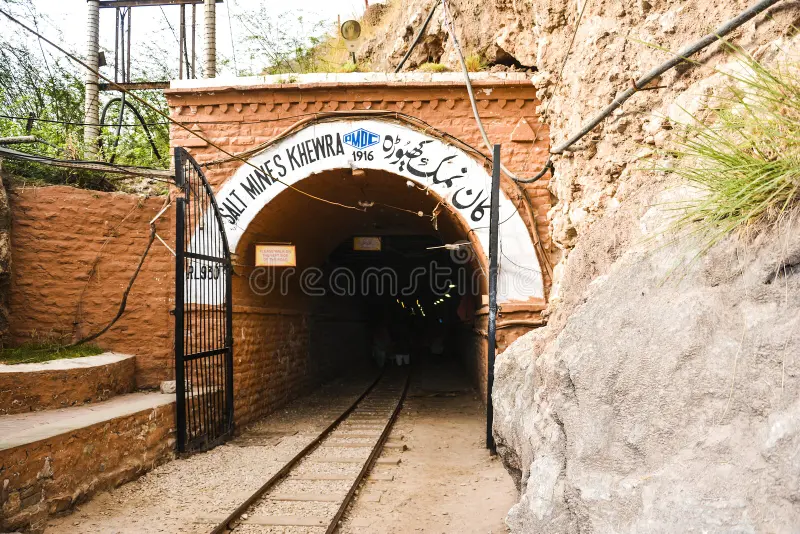
Khewra Salt Mine is located in Khewra town in Pind Dadan Khan Tehsil of Jhelum District in Punjab, Pakistan. The mine lies within the Salt Range hills that stretch across northern Punjab and form part of the Pothohar Plateau.
Distances from major cities
- Islamabad to Khewra Salt Mine: about 160 km
- Lahore to Khewra Salt Mine: about 200 km
- Rawalpindi to Khewra Salt Mine: about 155 km
Travel route
Most visitors travel via the M-2 Motorway.
Typical route
- Take the M-2 Motorway from Islamabad or Lahore
- Exit at Lilla Interchange
- Drive toward Pind Dadan Khan
- Follow signs to Khewra Salt Mine Tourist Resort
The journey from Islamabad usually takes around two to two and a half hours which makes the mine a popular day trip destination.
Geological Origin of Himalayan Pink Salt
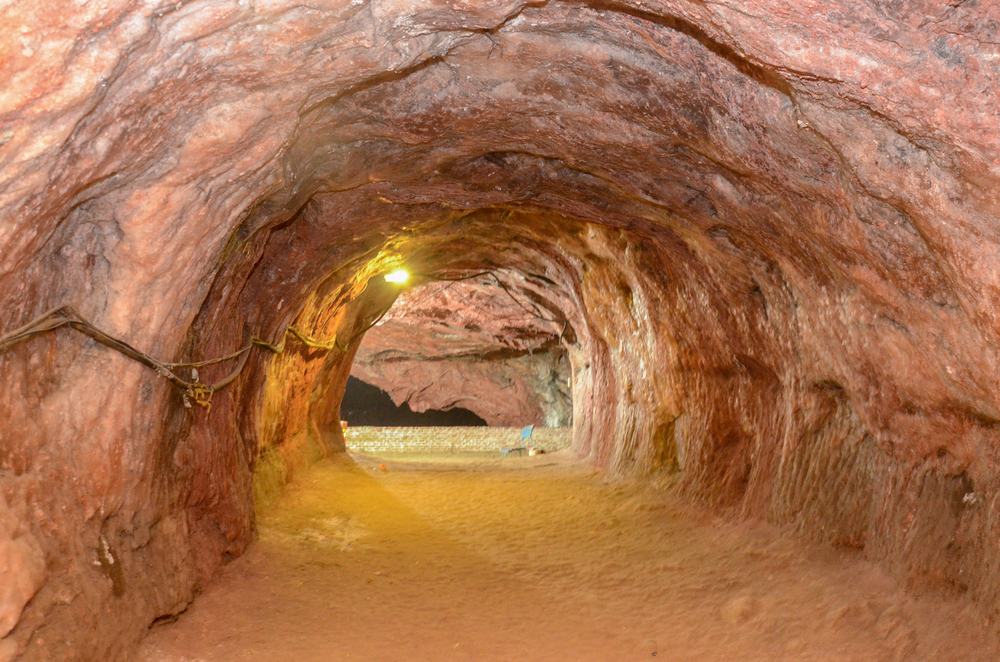

The rock salt found in Khewra formed roughly 540 to 600 million years ago when this region was covered by a vast prehistoric sea. Over time the seawater evaporated and left thick layers of salt and minerals on the seabed.
Later these layers were buried beneath sediment and rock for millions of years. Geological changes then reshaped the entire region when tectonic plates began to move.
The Indian tectonic plate separated from the ancient supercontinent Gondwana and started moving northward. Eventually it collided with the Eurasian plate. This collision created some of the highest mountain systems in the world including
- the Himalayas
- the Karakoram
- the Hindu Kush
- the Pamir Mountains
During this tectonic activity the Salt Range was pushed upward. Mineral deposits including rock salt were trapped inside layers of sedimentary rock and preserved underground. The pressure created the rich salt formations that are mined today.
Discovery of the Salt Deposits
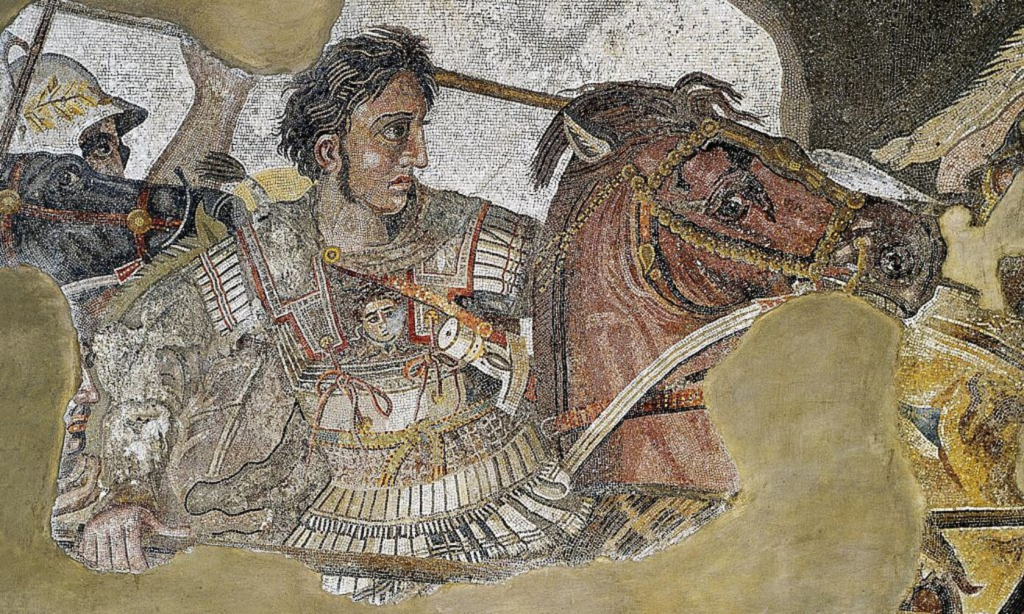
Local legend links the discovery of the salt deposits to the army of Alexander the Great during his campaign in the region in 326 BC.
According to the story, soldiers noticed their horses licking rocks along the hills. Animals naturally detect salt sources, and this unusual behavior revealed the presence of rock salt in the area.
Although the deposits were known for centuries, large scale mining developed later during different historical periods.
Mining During the Mughal and British Periods
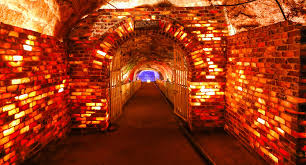
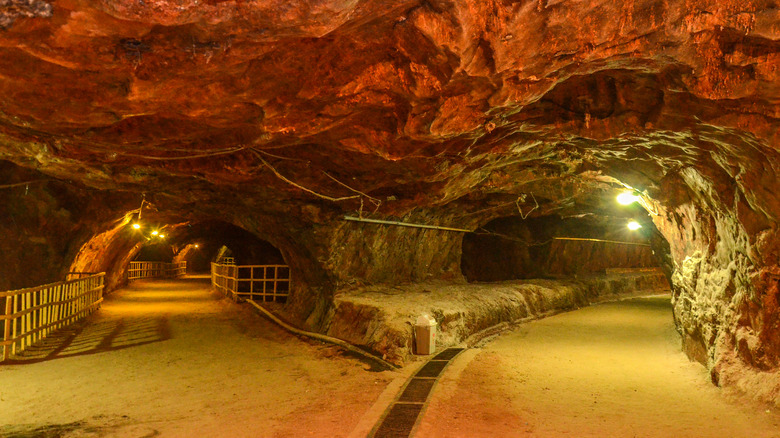
Salt from the Salt Range was extracted during the Mughal era and transported through regional trade routes. Mining at that time remained simple and mostly manual.
Major development occurred during the British colonial period.
In 1872 a British mining engineer named Dr. H. Warth designed a modern tunnel system that allowed safer and more efficient extraction. The structured layout of tunnels and chambers that he introduced still forms the basis of the mine’s design today.
Size and Structure of the Mine
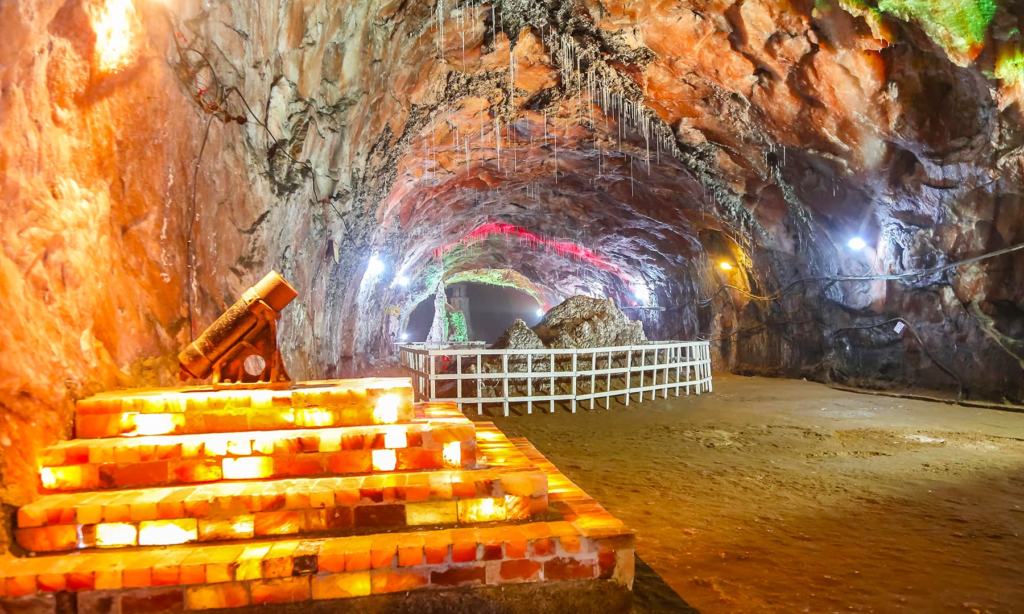
Khewra Salt Mine is a vast underground complex that extends deep into the hills of the Salt Range.
Important structural facts include
- 19 total levels within the mine
- 11 levels located underground
- more than 40 kilometers of tunnels
- a main tourist tunnel extending about 730 meters
To keep the structure stable, only about half of the salt is extracted while the remaining portion is left in pillars that support the mine ceiling.
The temperature inside the mine remains stable throughout the year between 18 and 21 degrees Celsius which makes it comfortable for visitors even during hot summers.
What Makes Himalayan Pink Salt Unique
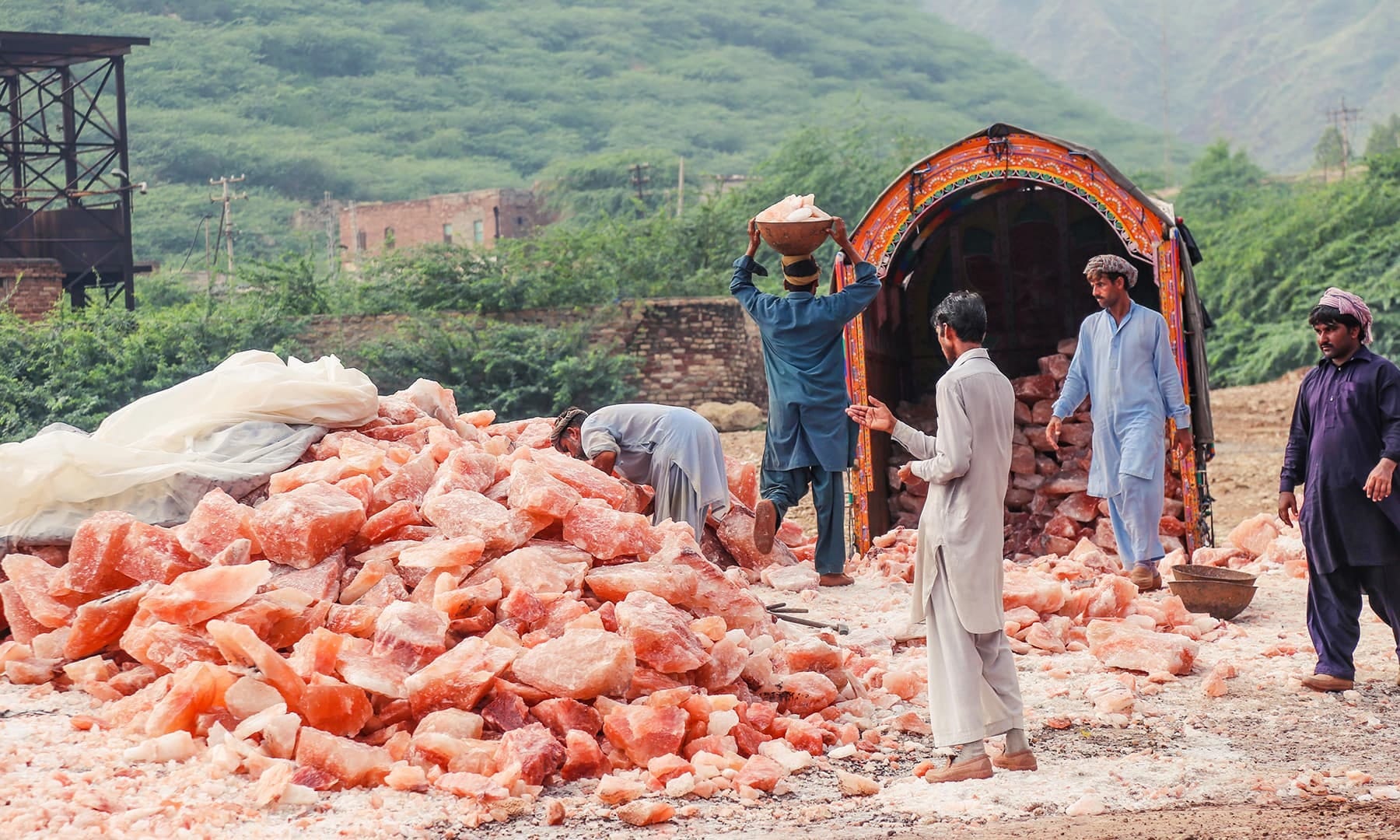
Salt extracted from Khewra is widely marketed around the world as Himalayan pink salt. The salt ranges in color from pale pink to deep red because of natural trace minerals present in the rock.
These minerals include
- iron
- magnesium
- potassium
- calcium
Chemically the salt is about 98 to 99 percent sodium chloride which makes it one of the purest forms of natural rock salt.
Himalayan pink salt is commonly used for
- cooking and gourmet food
- decorative salt lamps
- spa and wellness products
- bath salts and skincare
- salt therapy environments
The global demand for Himalayan salt has made the mine an important export source for Pakistan.
Major Attractions Inside Khewra Salt Mine
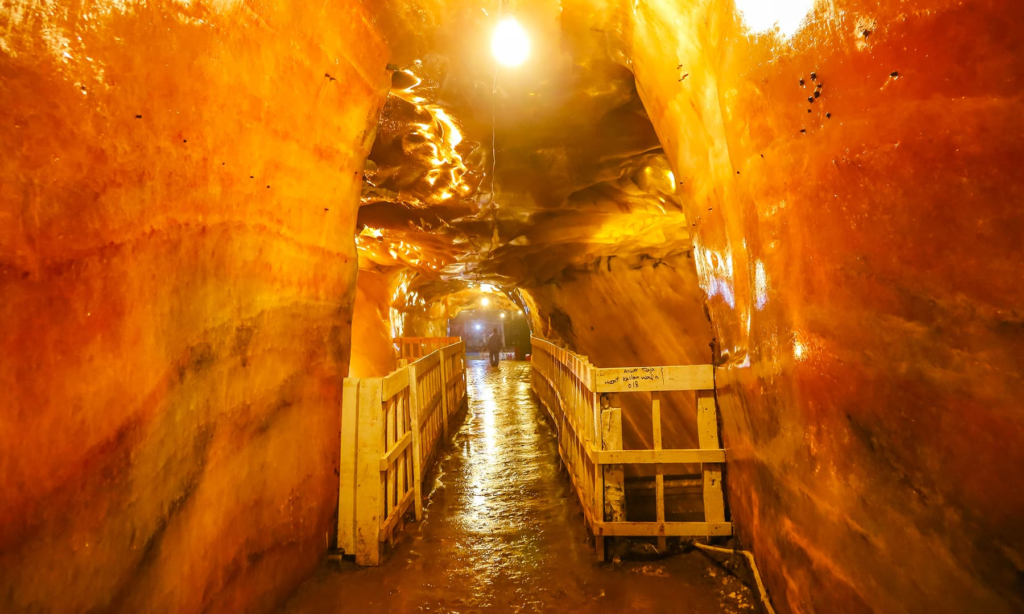


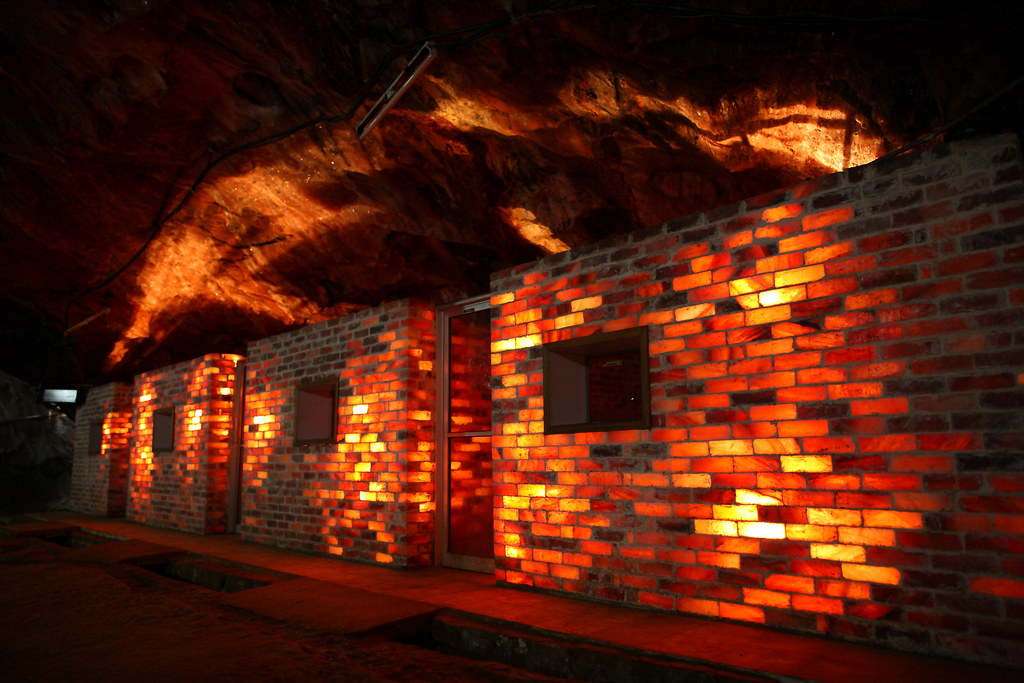
Visitors exploring the mine enter a unique underground landscape illuminated by soft lighting that reflects off pink salt crystals.
Popular attractions inside the mine include
Tourist Train
A small electric train carries visitors around 730 meters inside the mine. This ride makes the visit easy for families, children, and elderly travelers.
Sheesh Mahal
Also known as the Crystal Palace, this chamber contains beautiful salt crystals that sparkle under colored lights.
Salt Mosque
A mosque built entirely from salt bricks by miners. It is one of the most unusual religious structures in the country.
Replica Monuments
Salt sculptures inside the mine include replicas of famous landmarks such as
- Minar e Pakistan
- Badshahi Mosque
- the Great Wall of China
Pul Saraat Bridge
A narrow salt bridge crossing over a glowing underground saltwater pool which creates a striking visual effect.
Health Benefits and Salt Therapy
A special section inside the mine is used for halotherapy which is also known as salt therapy.
The naturally filtered air inside salt chambers contains microscopic salt particles that may help support respiratory health. Visitors often spend time in these chambers to relax and breathe the mineral rich air.
Salt therapy environments are believed to help people suffering from
- asthma
- allergies
- sinus congestion
- respiratory irritation
The cool underground climate and calm environment also make the mine a peaceful place for visitors.
Khewra Salt Mine Ticket Price 2026
Ticket prices may vary slightly depending on whether the tourist train ride is included.
Pakistani visitors
- Adult ticket above 12 years about PKR 450
- Student ticket with valid ID about PKR 250
- Senior citizens around PKR 250
Note: All ticket prices listed are for standard entry without the optional electric tourist train ride. The train is charged separately
Foreign visitors
- Adult ticket about 21 USD payable in local currency
- Student or child ticket about 11 USD
Optional train ride
The electric tourist train may add roughly PKR 200 to PKR 250 for local visitors depending on the ticket option.
Visitors are advised to check prices at the entrance ticket counter as rates can change slightly over time.
Production and Visitor Statistics
The mine is operated by the Pakistan Mineral Development Corporation and remains the country’s most important rock salt source.
Important statistics include
- annual production of about 350000 tons of salt
- estimated reserves between 82 million and 600 million tons
- around 230000 to 250000 visitors every year
These numbers highlight both the economic and tourism importance of the mine.
Best Time to Visit
The mine can be visited throughout the year but some seasons offer a more comfortable travel experience.
Best seasons
- October to March for cooler weather
- Spring months for pleasant travel conditions
Best visiting time during the day
- early morning for fewer crowds
- weekdays for a quieter experience
Visitor Tips for First Time Travelers
To make the most of your trip keep the following tips in mind
- wear comfortable walking shoes
- carry a light jacket because the interior temperature is cool
- bring a camera for photography
- allow at least one to two hours for exploration
- combine the visit with nearby attractions like Katas Raj Temples and Kallar Kahar Lake
Interesting Facts About Khewra Salt Mine
Here are some captivating facts that showcase why the Khewra Salt Mine remains one of Pakistan’s most remarkable natural and historical treasures:
- The mine is the second largest salt mine in the world — Ranking just behind the Goderich Mine in Canada, Khewra stands as the planet’s second-largest operational salt mine, spanning a vast underground network across the Salt Range.
- The mine has been in use for centuries and still operates today — With roots tracing back potentially to Alexander the Great’s time (326 BC) and continuous large-scale mining since the Mughal and British eras, Khewra remains actively operational under the Pakistan Mineral Development Corporation.
- It produces hundreds of thousands of tons of rock salt annually — The mine yields approximately 325,000 to 350,000 tons of high-quality rock salt each year, supporting both domestic use and significant exports.
- Many tunnels and chambers are beautifully illuminated for visitors — Soft, colorful LED lighting transforms the underground passages into a glowing wonderland, accentuating the natural pink hues and crystal formations for an enchanting visitor experience.

- It remains the main source of Himalayan pink salt exported worldwide — Virtually all authentic Himalayan pink salt on the global market originates from Khewra’s ancient deposits, prized for its natural mineral content and distinctive color.

Final Thoughts
The Khewra Salt Mine is one of the most fascinating natural attractions in South Asia. From its ancient geological origin to its role as the world’s primary source of Himalayan pink salt, the mine represents a unique combination of science, history, and tourism.
Visitors walking through the glowing tunnels are not only exploring a beautiful underground world but also stepping into a geological story that began hundreds of millions of years ago.
For travelers exploring northern Punjab or planning a cultural and geological trip in Pakistan, Khewra Salt Mine offers a memorable journey into one of the earth’s most extraordinary natural treasures.
If you are planning to visit the remarkable Khewra Salt Mine, contact us to plan your journey and make this underground adventure comfortable and memorable.
Frequently Asked Questions About Khewra Salt Mine
Where is Khewra Salt Mine located?
Khewra Salt Mine is located in Khewra town in Pind Dadan Khan Tehsil of Jhelum District in Punjab, Pakistan. The mine lies within the Salt Range mountains and is approximately 160 kilometers from Islamabad and about 200 kilometers from Lahore.
Which district is Khewra Salt Mine located in?
Khewra Salt Mine is located in Jhelum District of Punjab, Pakistan. Administratively it falls under Pind Dadan Khan Tehsil within the historic Salt Range region.
What is the ticket price for Khewra Salt Mine in 2026?
The ticket price for Pakistani adults is around PKR 450, while students and senior citizens pay approximately PKR 250. Foreign visitors pay about 21 USD for adults and 11 USD for children or students. Optional tourist train rides inside the mine may cost an additional PKR 200 to PKR 250.
How far is Khewra Salt Mine from Islamabad?
Khewra Salt Mine is located about 160 kilometers from Islamabad. The journey usually takes around two to two and a half hours by car via the M-2 Motorway and Lilla Interchange.
What are the directions to reach Khewra Salt Mine?
Travelers usually take the M-2 Motorway from Islamabad or Lahore, exit at Lilla Interchange, and then drive toward Pind Dadan Khan. From there, follow the signs leading directly to the Khewra Salt Mine tourist complex.
Who first discovered the Khewra Salt Mine?
According to local legend, the salt deposits were discovered around 326 BC by soldiers of Alexander the Great. They reportedly noticed their horses licking salty rocks in the hills, which revealed the presence of rock salt deposits in the region.
What is the contact number for Khewra Salt Mine?
The mine is operated by the Pakistan Mineral Development Corporation. Visitors seeking updated information about tickets, timings, or tourism facilities can contact the local management office or check official PMDC tourism channels for the latest contact numbers.
Can visitors take photos inside Khewra Salt Mine?
Yes, visitors are allowed to take photos inside most sections of the mine. The illuminated tunnels, salt mosque, Sheesh Mahal crystal chamber, and underground salt lake are popular photography spots.
What makes Himalayan pink salt from Khewra unique?
Himalayan pink salt from Khewra is famous for its natural mineral composition including iron, magnesium, potassium, and calcium. These minerals give the salt its distinctive pink color and make it popular for culinary use, decorative lamps, and wellness products.
Is Khewra Salt Mine the largest salt mine in the world?
Khewra Salt Mine is the second largest salt mine in the world and the largest in Pakistan. It produces roughly 350,000 tons of rock salt annually and contains vast reserves estimated between 82 million and 600 million tons.