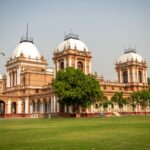
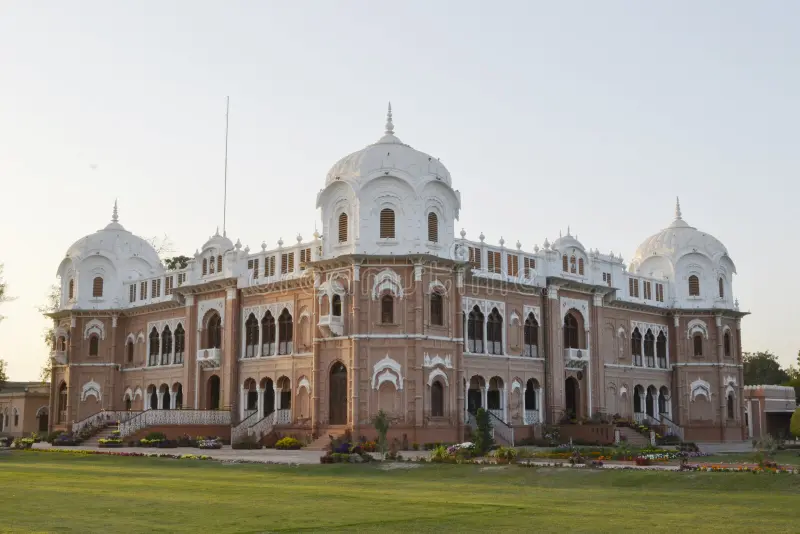
Darbar Mahal (Urdu: دربار محل) stands as one of the most commanding symbols of royal governance in the historic city of Bahawalpur. Completed in 1905, this monumental red brick palace was constructed as a ceremonial court where authority was displayed, policies were shaped, and sovereignty was affirmed.
Unlike the romantic elegance of residential palaces, Darbar Mahal was built to project discipline, institutional strength, and political order. Its towering domes and symmetrical façade reflect the confidence of a princely state at the height of its administrative power.
Darbar Mahal History and Origins
In the early twentieth century, the princely state of Bahawalpur was among the most prosperous and politically stable states under British India. Governed by the Abbasi dynasty, the state maintained internal autonomy while aligning diplomatically with the British Crown.
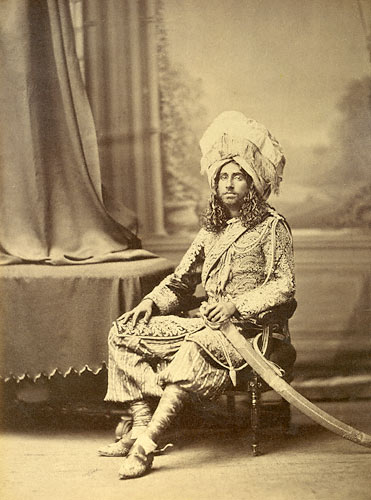
Darbar Mahal was constructed in 1905 during the reign of Nawab Bahawal Khan V. Historical documentation associates the palace with his administrative expansion and modernization initiatives.
Before the name Darbar Mahal became widely recognized, some references suggest it was at times called Bahawal Garh and in certain accounts Mubarak Mahal. Over time, its identity became permanently linked with its function as the royal court.
The palace was specifically designed for:
• State assemblies
• Royal ceremonies
• Administrative governance
• Reception of dignitaries
It functioned as the political center of the Bahawalpur State.
Darbar Mahal During the Accession of Bahawalpur

During the later years of the princely era, under Nawab Sir Sadiq Muhammad Khan Abbasi V, Bahawalpur acceded to Pakistan in 1947.
Although Darbar Mahal predates his full administrative rule, it remained part of the royal estate during this historic transition. The palace symbolized continuity of governance as the region moved from princely sovereignty to integration within Pakistan.
Following the merger of Bahawalpur State in 1955 to 1956, Darbar Mahal transitioned from royal administration to federal oversight, marking the conclusion of its ceremonial governance role.
Darbar Mahal Architecture and Structural Design
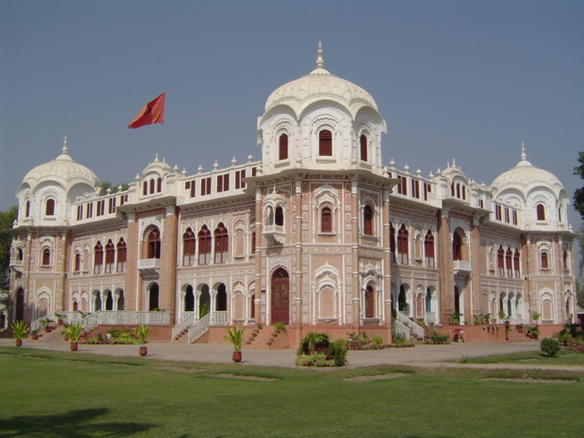
Darbar Mahal represents a refined architectural fusion of Indo Islamic, Mughal, colonial, and European influences. The structure balances symmetry with ornamental detailing, creating a visual identity rooted in authority rather than leisure.
Darbar Mahal Exterior Features
The exterior façade is defined by:
• Four interconnected domes rising prominently above the structure
• A symmetrical red brick façade accented with white stucco detailing
• Jharoka style balconies
• Decorative corner towers and slender minarets
• Intricate geometric latticework and carved motifs
Its disciplined symmetry invites comparison with monumental Mughal landmarks such as the Lahore Fort, though Darbar Mahal maintains its distinct princely character.
Spanning approximately 44,600 square feet, the palace’s scale reinforces its purpose as a seat of governance.
Darbar Mahal Interior Layout
While the interior is generally not open to the public, historical accounts describe:
• Expansive ceremonial halls
• Elevated ceilings with decorative moldings
• Administrative chambers arranged in formal sequence
• Internal courtyards supporting ventilation and structured spatial flow
The architectural planning prioritizes visibility, acoustics, and ceremonial formality.
Darbar Mahal Construction Significance
Completed in 1905, Darbar Mahal embodied the administrative confidence of Bahawalpur at its peak.
The brick masonry, domed roofing system, pointed arches, and balanced proportions reflect early twentieth century princely craftsmanship. The design communicates permanence and institutional strength.
Darbar Mahal was constructed to command respect and represent governance with dignity.
Darbar Mahal Ownership and Present Status
After the integration of Bahawalpur State into Pakistan, Darbar Mahal came under government administration.
Today, the palace is managed by the Pakistan Army and serves as the headquarters of the 35 Infantry Division. Due to its military designation, public access to the interior remains restricted.
Visitors may view the palace externally, where its domes and façade remain among the most photographed architectural landmarks of Bahawalpur.
Darbar Mahal Cultural and Historical Importance
Darbar Mahal remains one of the most historically significant landmarks in southern Punjab. It represents:
• The administrative authority of the Abbasi dynasty
• Political stability during the British era
• Early twentieth century princely architecture
• The ceremonial governance structure of a former royal state
While Noor Mahal reflects royal residence and elegance, Darbar Mahal stands as the palace of order, protocol, and state authority.
Standing beneath its towering domes, visitors experience the disciplined grandeur of a state that once governed with ceremonial precision.
Why you should visit Darbar Mahal
Darbar Mahal is more than a historic building. It is a monument to governance, sovereignty, and structured political power that continues to define the royal identity of Bahawalpur.
For travelers seeking to explore the heritage of the region, Saiyah Travels offers professionally guided experiences covering Darbar Mahal and other historic palaces of Bahawalpur with expert local insight and curated itineraries.
Frequently Asked Questions – History of Darbar Mahal, Bahawalpur
What is the history of Darbar Mahal?
Darbar Mahal was built in 1905 during the reign of Nawab Bahawal Khan V as a royal court for ceremonies, administrative governance, and reception of dignitaries in Bahawalpur.
Who owns Darbar Mahal?
Darbar Mahal is currently under the control of the Pakistan Army and serves as the headquarters of the 35 Infantry Division. Public interior access is restricted.
How to visit Darbar Mahal?
Visitors can view Darbar Mahal externally. Interior access is restricted due to its military status. It is recommended to confirm access locally before planning a visit.
What is the architectural style of Darbar Mahal?
Darbar Mahal features a fusion of Indo-Islamic, Mughal, colonial, and European architectural styles, with symmetrical red brick façades, domes, jharoka balconies, and ornamental minarets.
What are the key features of Darbar Mahal?
Key features include four grand domes, decorative stucco work, corner towers, intricate lattice patterns, ceremonial halls, and internal courtyards designed for governance and protocol.
When was Darbar Mahal built and by whom?
Darbar Mahal was constructed in 1905 during the reign of Nawab Bahawal Khan V of the Abbasi dynasty in Bahawalpur.
What is the cultural importance of Darbar Mahal?
Darbar Mahal represents the administrative authority of the Abbasi dynasty, political stability during British rule, and early twentieth-century princely architecture in Bahawalpur.
Is Darbar Mahal open for public tours?
The interior of Darbar Mahal is not open for public tours due to military control. Visitors can admire the palace externally and photograph its domes and façade.
What other royal palaces are near Darbar Mahal?
Other notable royal palaces in Bahawalpur include Noor Mahal, Gulzar Mahal, Farukh Mahal, and Nishat Mahal, all reflecting the heritage of the Abbasi dynasty.
How can I book a guided tour of Darbar Mahal with Saiyah Travels?
Saiyah Travels offers professionally guided heritage tours of Bahawalpur, including a special 5-palace tour covering Darbar Mahal, Noor Mahal, Nishat Mahal, Gulzar Mahal, and Farukh Mahal. Tours include expert local insights and curated itineraries. Contact Saiyah Travels via phone or email to book.