
5 Famous Palaces of Bahawalpur – Noor Mahal, Darbar Mahal & Royal Heritage
Bahawalpur is one of Pakistan’s most historically rich cities and was once the capital of the princely state of Bahawalpur, ruled by the Abbasi Nawabs from the 18th century until 1947. Located on the edge of the Cholistan Desert, the state held strategic importance due to its trade routes, fertile lands, and political alliances with the British Empire.
The royal family invested heavily in architecture to reflect their power, sophistication, and global outlook. As documented in historical records and widely cited sources such as Wikipedia, most of Bahawalpur’s famous Mahals were constructed between 1872 and 1904. These palaces combined European planning with local craftsmanship, creating a unique architectural identity that set Bahawalpur apart from other princely states of South Asia.
Today, the palaces of Bahawalpur are considered some of the most important heritage landmarks in Punjab, attracting historians, architecture enthusiasts, and domestic tourists interested in Pakistan’s royal past.
1. Noor Mahal Bahawalpur – The Crown Jewel of the Desert
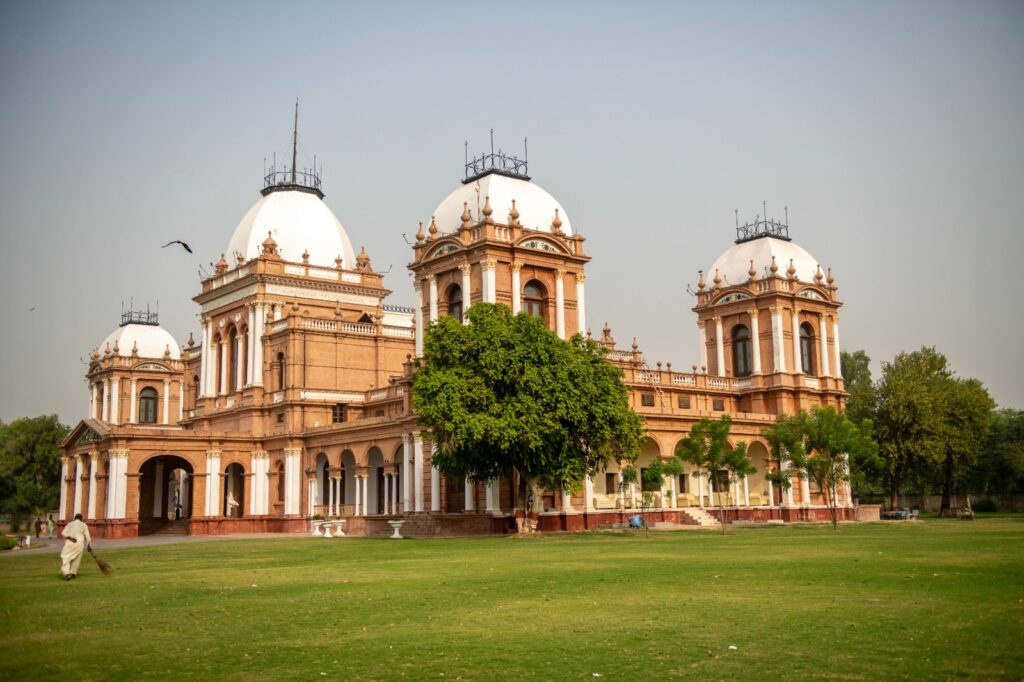
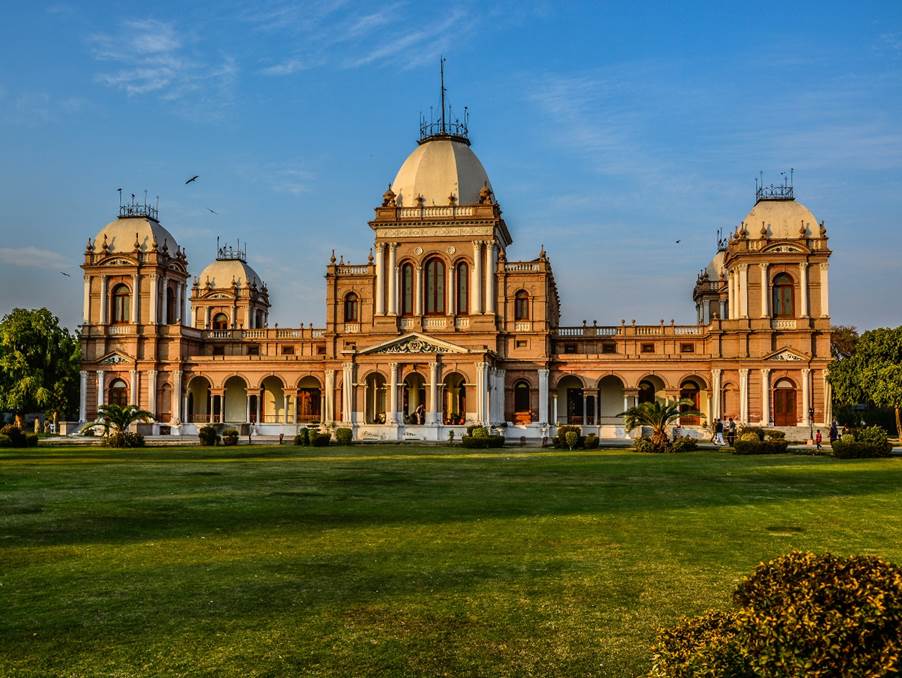
Noor Mahal is the most iconic palace of Bahawalpur and one of the best-known historical buildings in Pakistan. Construction began in 1872 during the reign of Nawab Sadiq Muhammad Khan IV. According to historical documentation, the palace was designed by a British architect in the Italian neoclassical style, reflecting European influence during the British colonial period.
The building features symmetrical design, large Corinthian columns, arched windows, and spacious halls. Imported construction materials, furniture, and decorative elements were brought from England and Italy, highlighting the Nawab’s wealth and global connections.
The Story Behind Noor Mahal
Historical accounts state that Noor Mahal was constructed as a residence for the Nawab’s wife. However, its location near the city made it vulnerable according to royal security standards of the time. As a result, the royal family never permanently resided there. Instead, Noor Mahal was occasionally used for state guests and official receptions.
After the creation of Pakistan, the palace came under government control and was later managed by the Pakistan Army. It has since been restored and opened to the public, becoming one of the most visited heritage sites in Bahawalpur.
Facts About Noor Mahal
- Construction began in 1872
- Italian neoclassical architectural style
- Designed by a British architect
- Furnished with imported European materials
- Used mainly for state guests rather than residence
Area Covered
Noor Mahal is spread over approximately 5 acres, including landscaped lawns surrounding the main structure.
2. Darbar Mahal Bahawalpur – A Palace of Authority
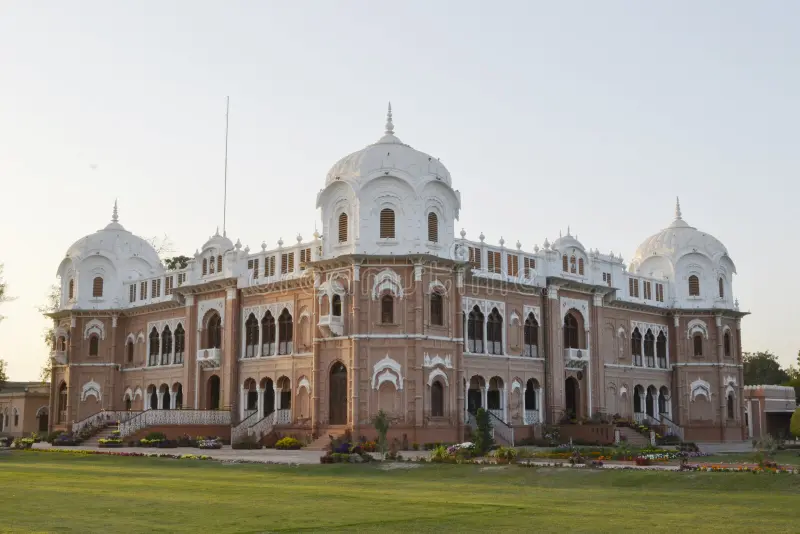
Darbar Mahal is one of the grandest and most imposing palaces of Bahawalpur. It was constructed in 1904 by Nawab Sadiq Muhammad Khan V and reflects the political authority of the Abbasi rulers during the late princely era.
The palace is built with red sandstone and features domes, balconies, and decorative elements inspired by Mughal and Rajput architecture. Its commanding façade was designed to project strength and royal dignity.
The Story Behind Darbar Mahal
Darbar Mahal was built as a royal residence for one of the Nawab’s queens. Historical records suggest that it was also associated with administrative and ceremonial functions due to its size and prominent location. The palace symbolized the centralized power of the Nawab over the state.
Following the integration of Bahawalpur into Pakistan in 1955, the palace came under the control of the Pakistan Army, which continues to manage it today. While the interior is not open to the public, the exterior remains a major landmark.
Facts About Darbar Mahal
- Construction year: 1904
- Built by Nawab Sadiq Muhammad Khan V
- Mughal and Rajput architectural influence
- Constructed with red sandstone
- Managed by the Pakistan Army
Area Covered
Darbar Mahal covers an estimated 6 acres, making it one of the largest royal palaces in Bahawalpur.
3. Farukh Mahal Bahawalpur – The Forgotten Royal Residence
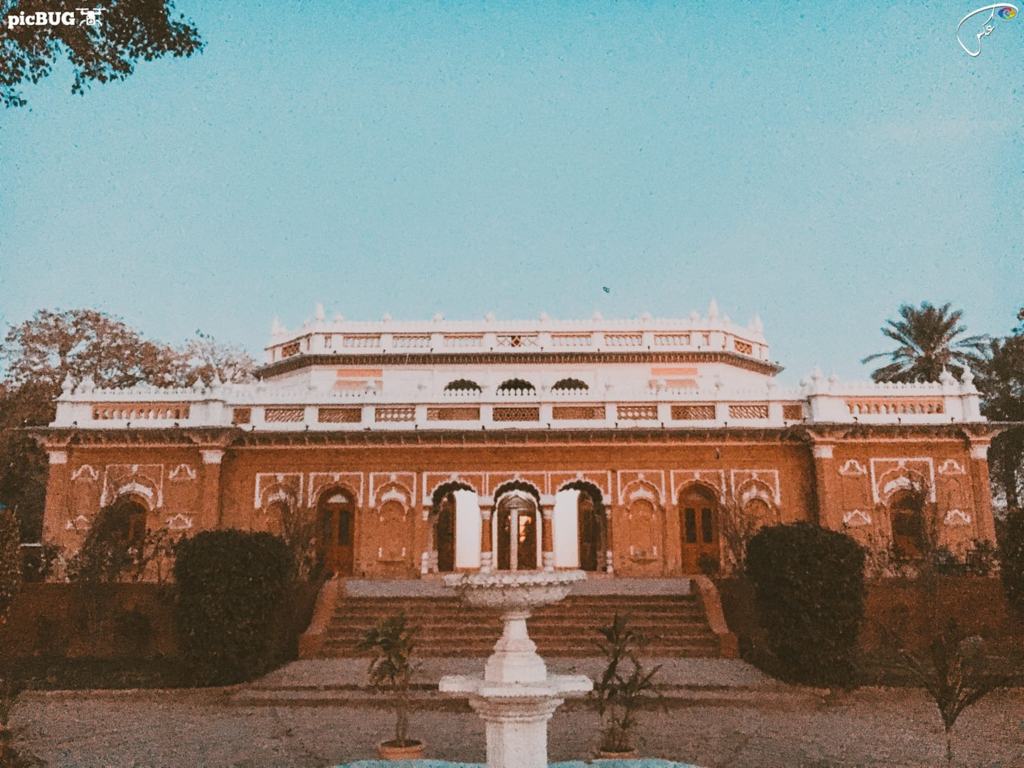
Farukh Mahal is a lesser-known but historically significant palace of Bahawalpur. It was primarily used as a residential palace for members of the Abbasi royal family and is listed among the royal properties of the former princely state.
Unlike Noor and Darbar Mahals, Farukh Mahal was designed for privacy rather than grandeur. Its layout focused on living quarters, internal courtyards, and limited public access.
The Story Behind Farukh Mahal
Historical references indicate that Farukh Mahal served as a quiet residence for the royal household. After the dissolution of the princely state, the palace gradually fell out of public attention, contributing to its lesser-known status today.
Facts About Farukh Mahal
- Built as a residential palace
- Used by members of the Abbasi family
- Designed for privacy rather than ceremonies
- Limited public access
Area Covered
Farukh Mahal is believed to cover around 3 to 4 acres, including residential buildings and courtyards.
4. Gulzar Mahal Bahawalpur – The Cultural Heart of the Abbasi Dynasty
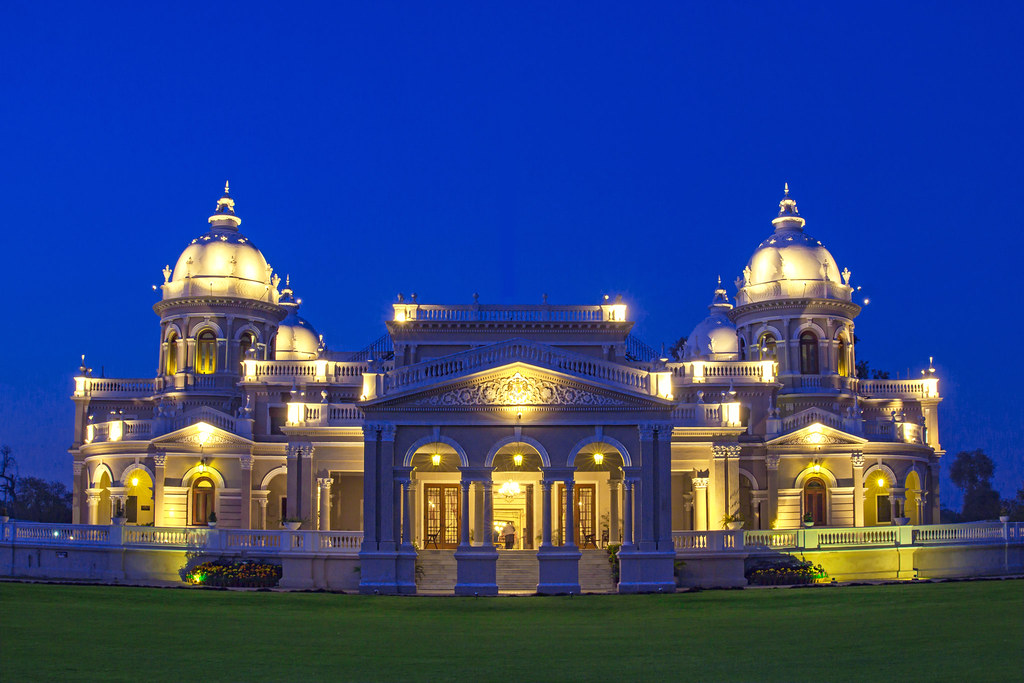
Gulzar Mahal was constructed in 1902 and is one of the earliest palaces built by Nawab Sadiq Muhammad Khan V. It represents the traditional royal lifestyle of the Abbasi dynasty and marks an important phase in the architectural development of Bahawalpur.
The palace design emphasizes functionality, family life, and ceremonial gatherings rather than European influence.
The Story Behind Gulzar Mahal
Historical accounts suggest that Gulzar Mahal was used for royal family events, cultural ceremonies, and important household gatherings. It played a central role in preserving royal customs and traditions.
Facts About Gulzar Mahal
- Construction year: 1902
- One of the earliest Mahals of Bahawalpur
- Used for cultural and family functions
- Reflects traditional architectural elements
Area Covered
Gulzar Mahal spans approximately 4 to 5 acres, including courtyards and adjoining structures.
5. Nishat Mahal Bahawalpur – A Palace of Privacy and Grace
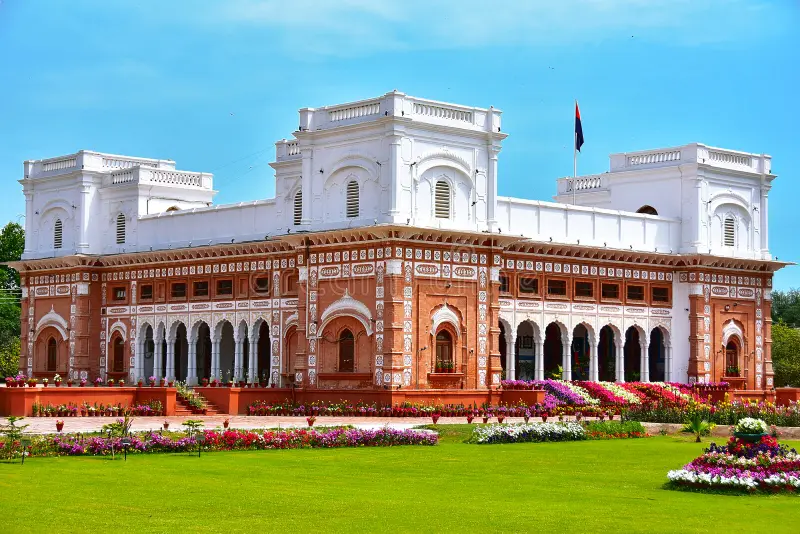
Nishat Mahal is one of the lesser-documented royal palaces of Bahawalpur and was built for private use by the Abbasi Nawabs. It reflects the quieter and more personal side of palace life.
The palace architecture is relatively simple when compared to Noor and Darbar Mahals, focusing on comfort rather than display.
The Story Behind Nishat Mahal
Historical references suggest that Nishat Mahal was used as a retreat by the royal family, away from public ceremonies and administrative responsibilities.
Facts About Nishat Mahal
- Used mainly for private royal gatherings
- Designed for comfort and seclusion
- Limited historical documentation available
- Important part of Bahawalpur’s royal landscape
Area Covered
Nishat Mahal covers an estimated 3 acres, including residential sections and garden areas.
Why Bahawalpur is Pakistan’s Royal Heritage Capital
Together, these five Mahals form a royal trail unmatched anywhere else in Pakistan. From the illuminated glory of Noor Mahal to the quiet dignity of Nishat Mahal, Bahawalpur offers a complete royal experience shaped by desert resilience and artistic excellence.
Whether you are a traveler, historian, blogger, or photographer, exploring the Mahals of Bahawalpur is a journey into timeless elegance.
Final Thoughts
The history of Bahawalpur, shaped by the Abbasi dynasty and reflected through its magnificent Mahals, offers a rare glimpse into Pakistan’s royal past. From administrative palaces to private royal residences, these historic structures collectively tell the story of power, culture, and architectural vision that once defined the princely state of Bahawalpur.
Exploring these Mahals in person allows visitors to truly understand their historical significance and architectural beauty. With Saiyah Travels, you can explore the royal Mahals of Bahawalpur through carefully planned heritage experiences that focus on history, culture, and authenticity.
To plan your visit, book a guided experience, or learn more about exploring Bahawalpur’s royal heritage, contact us and discover the timeless legacy of the Abbasi Nawabs.
Frequently Asked Questions – History of Bahawalpur Abbasi Dynasty and Mahals
Who were the Abbasi Nawabs of Bahawalpur?
The Abbasi Nawabs were the hereditary rulers of the princely state of Bahawalpur, governing the region from the early 18th century until 1947 under British India.
What is the historical background of Bahawalpur city?
Bahawalpur was founded as the capital of the Abbasi princely state and developed into a major political and cultural center in southern Punjab during the 18th and 19th centuries.
Why is Bahawalpur associated with the Abbasi dynasty?
Bahawalpur was ruled by the Abbasi dynasty for over two centuries, making it the seat of their political power, royal residences, and administrative institutions.
How many royal Mahals are there in Bahawalpur?
Bahawalpur is home to several royal Mahals, including Noor Mahal, Darbar Mahal, Gulzar Mahal, Farukh Mahal, and Nishat Mahal, built during the Abbasi rule.
Why did the Abbasi Nawabs build multiple Mahals in Bahawalpur?
The Abbasi Nawabs constructed different Mahals to serve specific purposes such as royal residences, administrative centers, ceremonial venues, and private retreats.
What architectural styles are found in Bahawalpur Mahals?
The Mahals of Bahawalpur feature a blend of Mughal, Rajput, Islamic, and European architectural styles influenced by local traditions and the British colonial era.
Which is the oldest Mahal in Bahawalpur?
Gulzar Mahal, constructed in 1902 during the reign of Nawab Sadiq Muhammad Khan V, is considered one of the earliest royal Mahals in Bahawalpur.
What happened to the Bahawalpur princely state after 1947?
After the creation of Pakistan in 1947, Bahawalpur remained an autonomous state until it was formally merged into Pakistan in 1955.
Are the Bahawalpur Mahals open to the public today?
Noor Mahal is open for visitors, while other Mahals such as Darbar Mahal and Gulzar Mahal are mostly viewed from the outside due to administrative use. With Saiyah Travels you can explore all these mahals.
Why is Bahawalpur important in the royal history of Pakistan?
Bahawalpur holds an important place in Pakistan’s royal history as one of the largest and most influential princely states with a rich architectural and cultural legacy.



A really well written report ,totally appreciate the efforts put into writing! It is very informative alas more articles shall be published.