
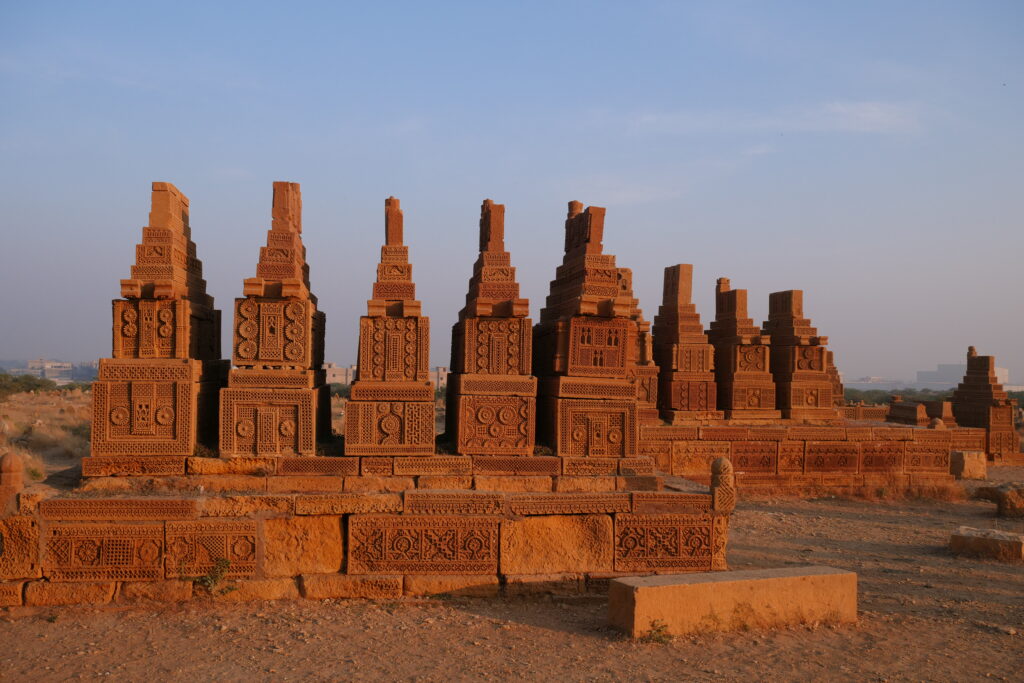
The Chaukhandi Tombs are one of the most remarkable historical and cultural landmarks in Pakistan. Located just outside Karachi, this centuries-old necropolis is famous for its intricately carved sandstone tombs, distinctive funerary architecture, and deep-rooted tribal history.
Unlike royal monuments, the Chaukhandi Tombs represent the lives of tribal communities, preserving their traditions, values, and artistic expression in stone. The site stands as a powerful example of how history and craftsmanship can immortalize culture, making it one of Sindh’s most unique heritage locations.
Quick Facts About Chaukhandi Tombs Karachi
- Location: Near Landhi along National Highway N-5, Karachi
- Distance: About 29–40 km east of Karachi, depending on route
- Time Period: 15th to 18th centuries
- Tombs: Hundreds of intricately carved tombs, with estimates of 500–600 well-preserved examples
- UNESCO Status: Tentative World Heritage Site since 1993
- Visiting Hours: Daylight hours (roughly 7 AM–7 PM in summer; closing at sunset in winter)
Historical Background and Origins
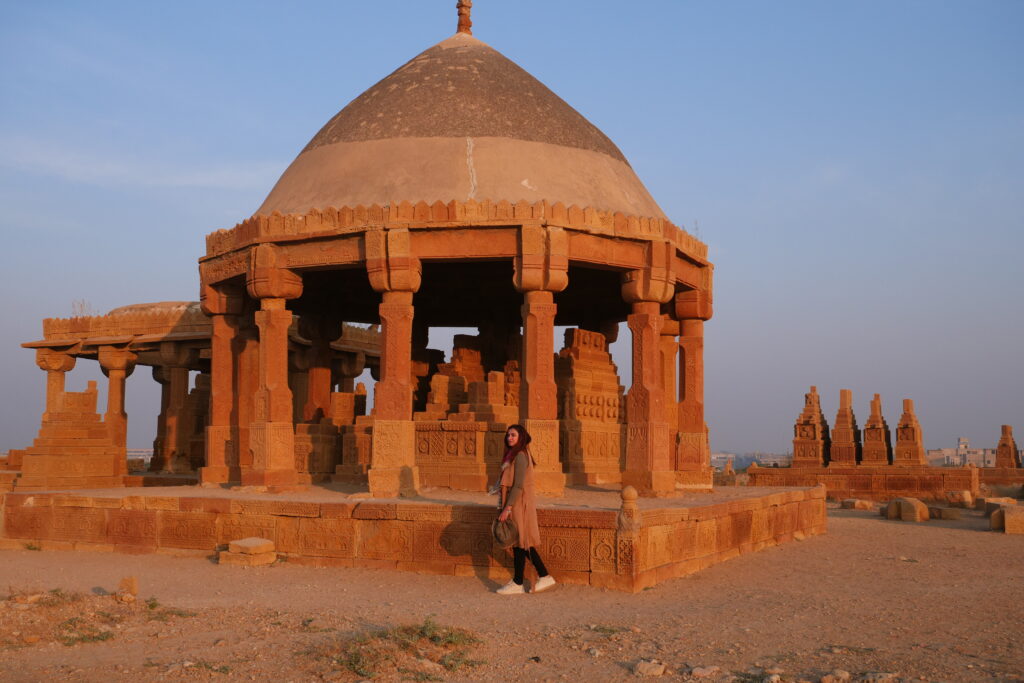
The Chaukhandi Tombs date back to the late 15th century, during a period dominated by tribal societies in Sindh. The site was primarily established by the Jokhio (Jokhiya) tribe, which played a central role in local cultural and social life.
Over time, other tribes also contributed burials, including Baloch families (Saloch lineage), Burfat, and Jakhra groups. Tomb construction continued through the 18th century, with the only reliably dated grave from AH 1169 (1756 AD), where numbers were inscribed in reverse, a fascinating historical quirk.
The name “Chaukhandi” refers to the four-sided stepped or pyramidal structure built from stacked yellow sandstone slabs. This architectural style is unique to Sindh and reflects centuries of regional craftsmanship.
Evolution of Tombs and Artistic Style
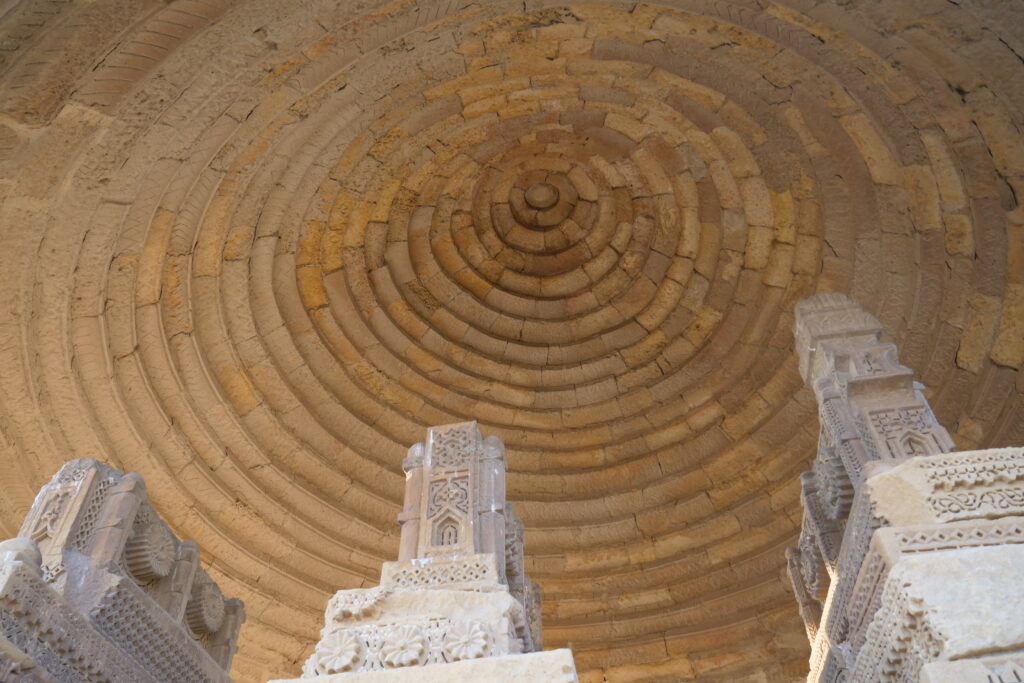
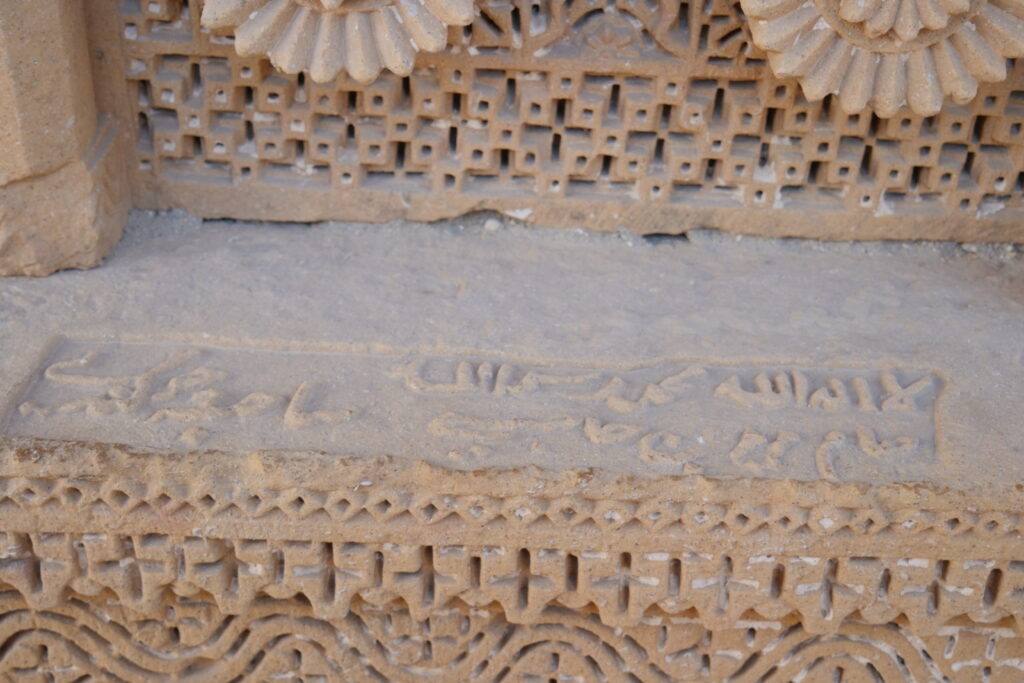
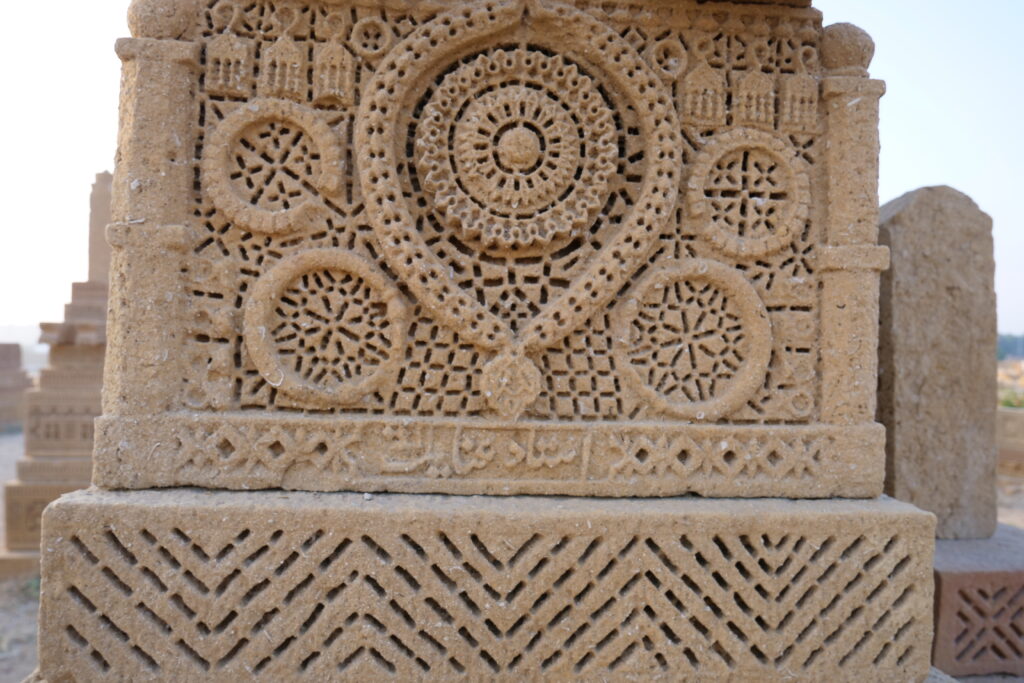
The Chaukhandi Tombs showcase a gradual evolution in funerary design and artistry:
- Early Phase (Late 15th Century): Simple tombs with minimal decoration, reflecting modest tribal traditions.
- 16th–17th Centuries: Elaborate tombs with geometric patterns, symbolic motifs, and detailed carvings. This period represents the height of artistic achievement.
- 18th Century: Highly refined craftsmanship, incorporating intricate stonework, decorative niches, and sometimes symbolic representations of gender and status.
The tombs also reveal influences from broader Sindh funerary traditions, including motifs seen in nearby Makli Necropolis and other regional cemeteries, blending local tribal artistry with Islamic-inspired designs.
Tribal Burials and Social Hierarchy
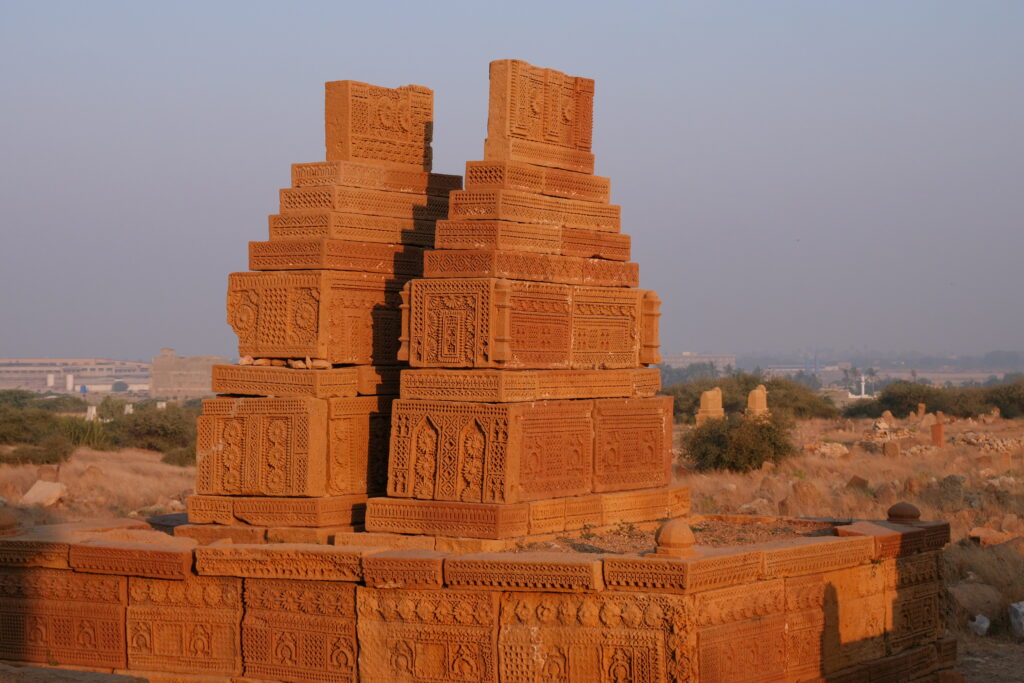
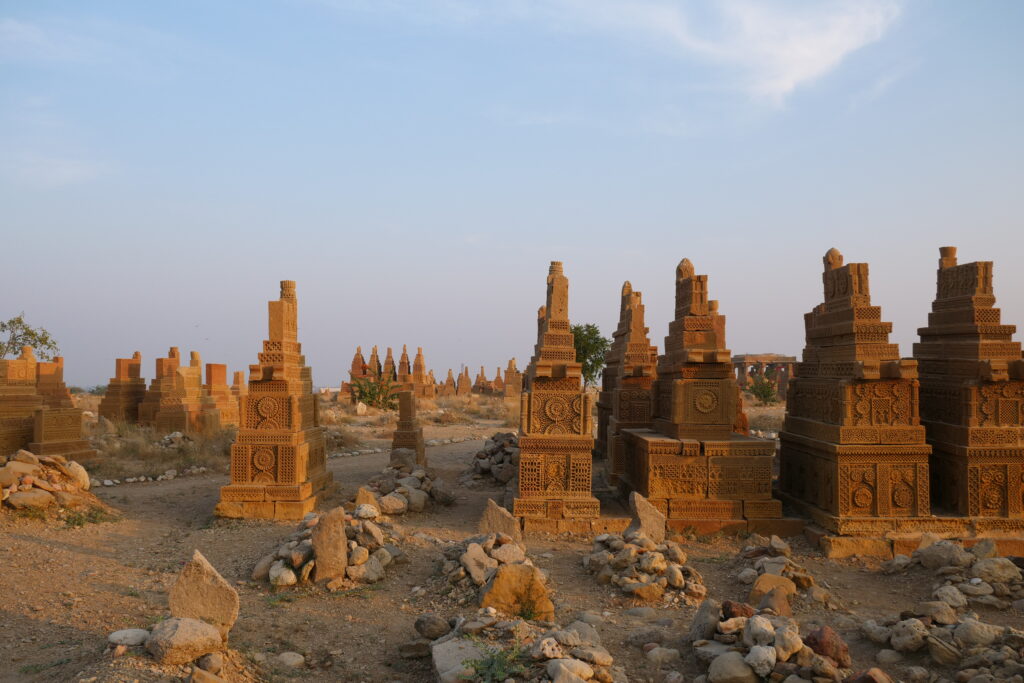
The Chaukhandi Tombs were primarily a tribal cemetery, reflecting the social structure of the communities:
- Jokhio Tribe: The primary community, with larger and prominent tombs.
- Baloch Families (Saloch lineage): Significant tribal presence.
- Burfat and Jakhra Tribes: Smaller clusters and modest graves.
Larger and more ornate tombs generally belonged to tribal leaders, elders, or warriors, while smaller graves marked the resting place of ordinary members. The layout provides insight into social hierarchy and familial ties within the tribal system.
Notable Burials and Tribal Legacy
Unlike Makli Necropolis, Chaukhandi Tombs focus less on widely documented historical figures and more on collective tribal identity:
- Tribal chiefs and influential elders
- Warriors, depicted with swords, shields, and sometimes horses
- Families, with carvings reflecting heritage and social status
The site’s emphasis on community rather than individual fame gives it a distinctive character in Sindh’s funerary landscape.
Symbolism and Meaning Behind the Tomb Carvings
One of the most remarkable aspects of Chaukhandi is the symbolic language carved into stone.
Men’s Tombs
Men’s graves often include:
- Swords and daggers
- Horses and shields
- Warrior imagery
These symbols represent strength, bravery, and honor.
Women’s Tombs
Women’s graves are decorated with:
- Jewelry patterns such as bangles and necklaces
- Floral and ornamental motifs
These carvings reflect beauty, identity, and social status.
Cultural Importance
These symbols turn the tombs into a visual storytelling system, preserving traditions that might otherwise have been lost.
These carvings provide a fascinating window into gender roles, traditions, and tribal life from centuries ago.
Oldest Chaukhandi Tombs
The oldest tombs date back to the 15th century, making them over 500 years old.
Timeline Overview:
- 1400s: Earliest tomb constructions
- 1500s–1700s: Peak development period
- Post–1700s: Decline in usage
This long timeline makes the site an important historical and archaeological record of Sindh.
Architecture of Chaukhandi Tombs
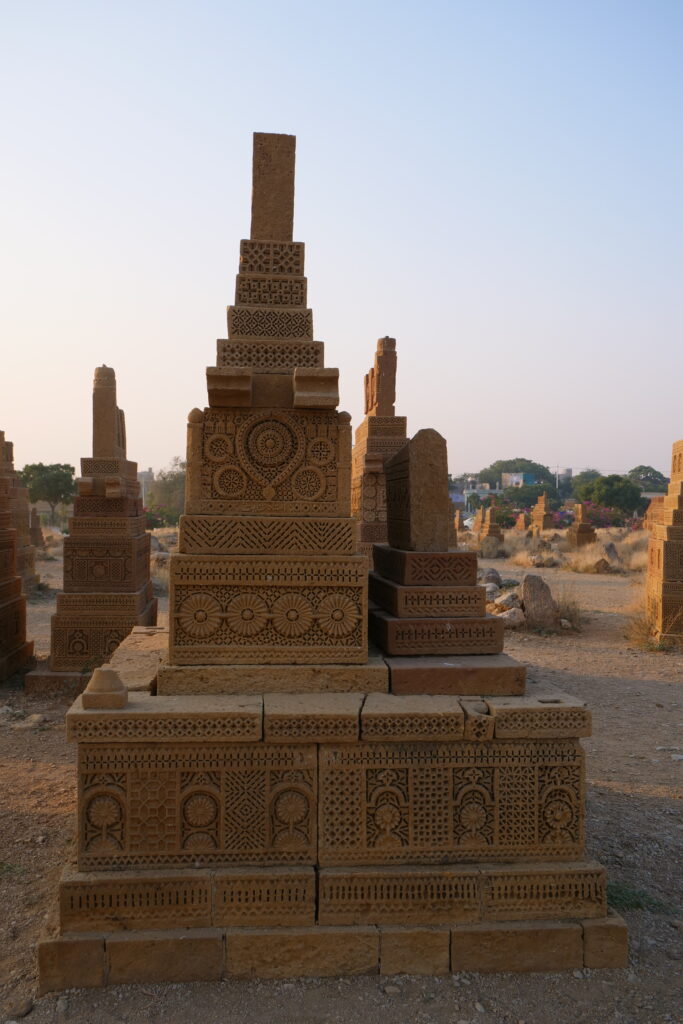
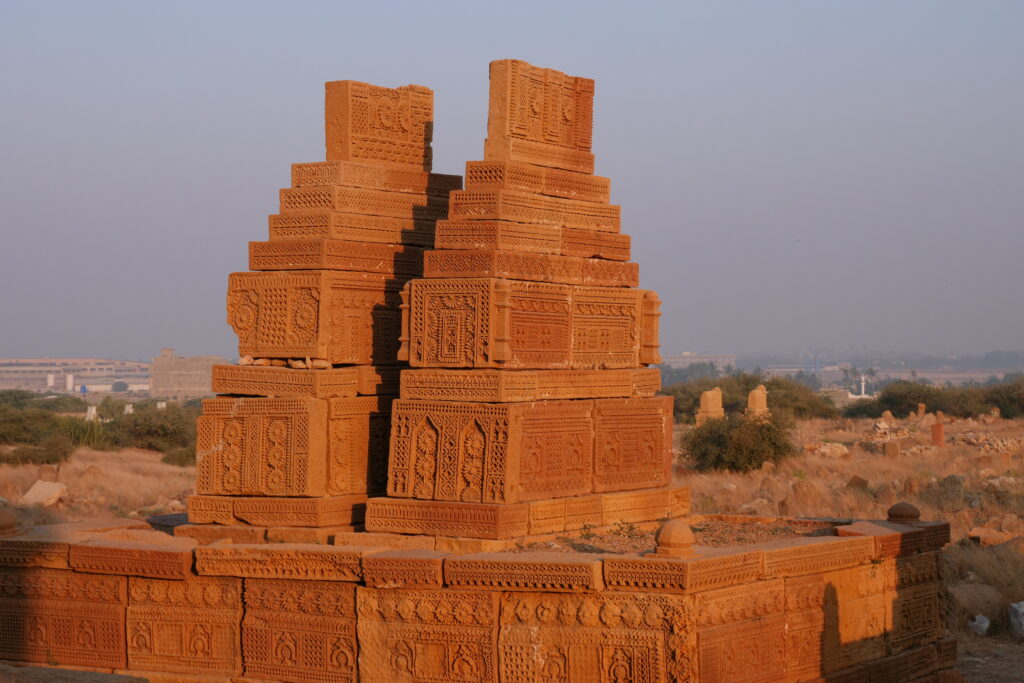
The Chaukhandi Tombs are built from stacked yellow/buff sandstone, often quarried from nearby areas such as Jungshahi in Thatta district. Key features include:
Key Features:
1. Sandstone Construction
The tombs are built using local yellow sandstone, which allows for detailed carving.
2. Pyramid-Shaped Structures
Each tomb consists of stacked slabs, creating a stepped, pyramid-like appearance.
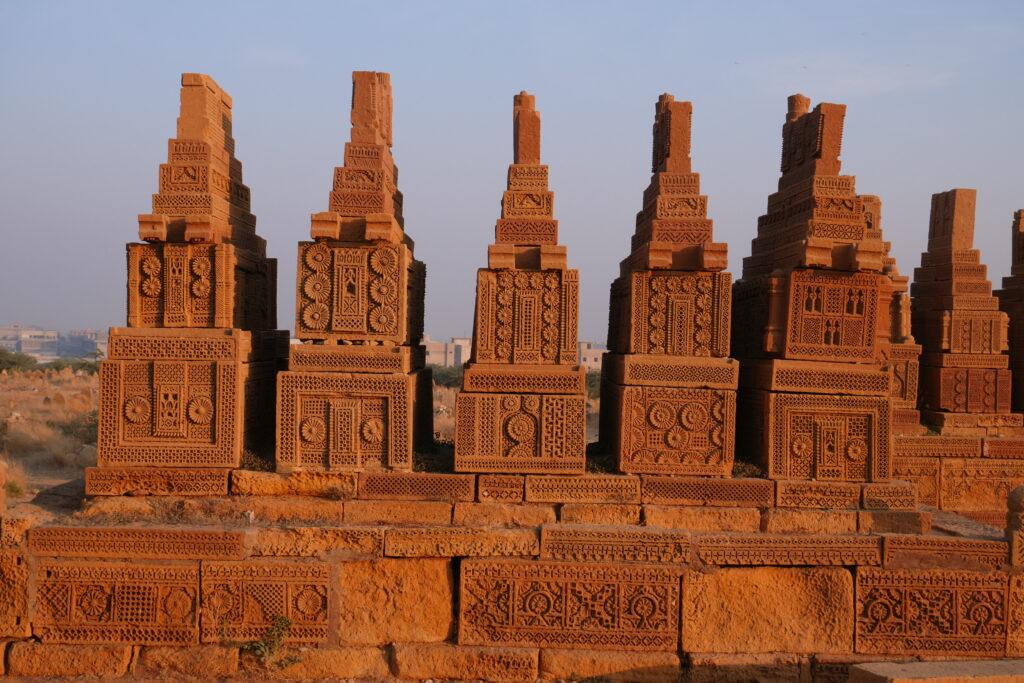
3. Intricate Carvings
The surfaces are decorated with:
- Floral patterns
- Geometric designs
- Figurative engravings
4. Chaukhandi Style
This distinctive style is unique to Sindh and is considered a regional architectural identity.
Layout and Organization
The necropolis is carefully organized, with graves clustered by lineage, tribe, or family:
- Prominent tombs are positioned centrally, smaller graves around them
- Clusters reflect family and social connections
- Visitors can trace social hierarchy and relationships through spatial arrangement
The layout allows for historical and anthropological insights while offering a structured walking path for visitors.
Accessibility and Visitor Experience
The Chaukhandi Tombs are easily accessible from Karachi, located along National Highway N-5. Visitors typically reach the site in 45–60 minutes by car.
The experience is peaceful and reflective, with minimal crowds. Some areas have a local caretaker who provides guidance and maintains the site. Visitors often enjoy quiet contemplation amidst centuries-old stone carvings.
Pro Tip: Combine a visit to Chaukhandi with nearby Bhambore ruins or Makli Necropolis for a full day of Sindh history.
Entry Fee and Visiting Hours
- Entry is approx 3,500 – 4000 PKR
- Accessible during daylight hours, roughly 7 AM–7 PM in summer, closing at sunset in winter
- Best visited early morning or late afternoon for softer lighting and comfort
Photography and Visual Appeal
The Chaukhandi Tombs are a visual delight for photographers:
- Carvings are enhanced by natural sunlight, especially in the morning and late afternoon
- Stepped structures create strong geometric compositions
- Patterns, colors, and shadows offer endless creative possibilities
Myths and Folklore
The quiet, isolated location has inspired local myths of supernatural presence. Visitors sometimes describe the site as mysterious or haunted, though no evidence supports these claims.
The atmosphere is shaped by silence, age, and historical depth, not paranormal activity.
Comparison with Makli Necropolis
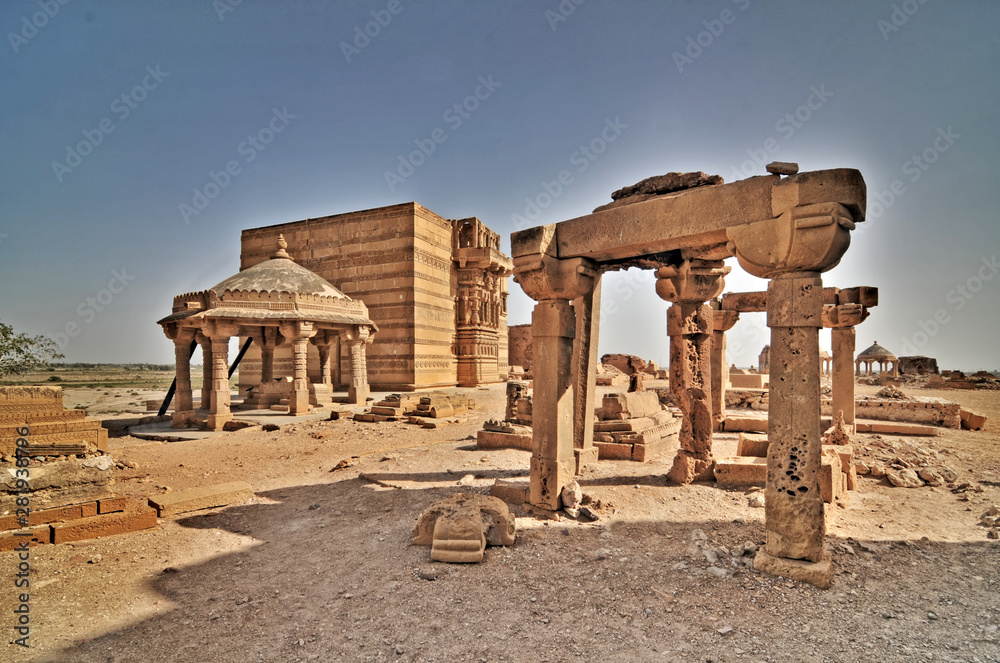
- Makli Necropolis: Largest graveyard in Sindh, associated with rulers, saints, and monumental architecture
- Chaukhandi Tombs: Smaller, tribal-focused, renowned for detailed carvings and community identity
This contrast highlights the diversity of funerary traditions in Sindh.
Conservation Challenges and Recent Developments
The tombs face weathering, erosion, and urban expansion pressures. Recent updates include:
- Plans for a museum and boundary wall by Karachi authorities
- Improved visitor facilities and site protection initiatives
- Ongoing efforts to preserve hundreds of carved tombs
These steps aim to safeguard cultural heritage while enhancing visitor experience.
Cultural and Educational Significance
Chaukhandi Tombs act as an open-air museum:
- Preserve tribal traditions and storytelling in stone
- Showcase unique Sindhi funerary architecture
- Offer researchers and visitors a glimpse into centuries-old social structure and artistry
The site is invaluable for historians, archaeologists, and tourists seeking insight into regional heritage.
Travel Tips for Visiting
- Visit during cooler hours for comfort
- Carry water and basic essentials
- Wear comfortable shoes for walking on uneven terrain
- Respect cultural and religious significance of the site
Interesting Facts
- Site contains hundreds of intricately carved tombs
- Tombs are over 500 years old, with only one dated 1756
- Carvings vary by gender and social status
- The architectural style is unique to Sindh
- Recognized internationally for cultural value
- South-to-north orientation of many burials is unusual for the region
The Chaukhandi Tombs offer a unique combination of history, art, and tribal storytelling. Their intricate carvings, distinctive architecture, and centuries-old legacy make them a must-visit historical site near Karachi.
Visitors, historians, and photographers can connect with centuries of tradition, experiencing Sindh’s rich heritage preserved in stone.
Saiyah travels offers guided tours to Chaukhandi tombs Necropolis, giving you a deeper look into its history, architecture, and cultural significance. Contact us for more details and to book your Chaukhandi Tombs Necropolis tour.
Frequently Asked Questions About Chaukhandi Tombs Karachi
What are the Chaukhandi Tombs in Karachi and why are they famous?
The Chaukhandi Tombs are a historic necropolis near Karachi known for their intricately carved sandstone graves. They are famous for their unique funerary architecture, detailed carvings, and representation of Sindh’s tribal culture and heritage.
Where are the Chaukhandi Tombs located and how can you visit them from Karachi?
The Chaukhandi Tombs are located near Landhi along National Highway N-5, about 30 to 40 kilometers from Karachi. Visitors can reach the site بسهولة by car in around 45 to 60 minutes.
How old are the Chaukhandi Tombs and who built them?
The tombs date back to the 15th century and were primarily built by the Jokhio tribe. Over time, other tribes such as Burfat, Jakhra, and Baloch families also contributed to the necropolis.
What makes the carvings on Chaukhandi Tombs unique in Sindh?
The carvings feature geometric patterns, floral designs, and symbolic imagery that represent gender, status, and tribal identity. This detailed stonework makes Chaukhandi one of the most artistically unique burial sites in Sindh.
What is the difference between Chaukhandi Tombs and Makli Necropolis?
Chaukhandi Tombs focus on tribal communities and detailed carvings, while Makli Necropolis is much larger and includes grand monuments of rulers, saints, and historical figures.
What do the symbols on Chaukhandi Tombs represent for men and women?
Men’s tombs often feature weapons like swords and shields symbolizing bravery, while women’s tombs include jewelry and floral patterns representing beauty, identity, and social status.
Is there an entry fee for Chaukhandi Tombs and what are the visiting hours?
Entry is generally 3500-4000pkr approx. The site is open during daylight hours, typically from early morning until sunset.
What is the best time to visit Chaukhandi Tombs in Karachi?
The best time to visit is during early morning or late afternoon, especially between October and March, when the weather is cooler and lighting is ideal for photography.
Are Chaukhandi Tombs a UNESCO World Heritage Site?
The Chaukhandi Tombs are on UNESCO’s tentative list of World Heritage Sites since 1993 due to their cultural and historical significance.
What should tourists know before visiting Chaukhandi Tombs in Pakistan?
Visitors should wear comfortable shoes, carry water, respect the cultural importance of the site, and be prepared for limited facilities as it is a preserved historical area.