
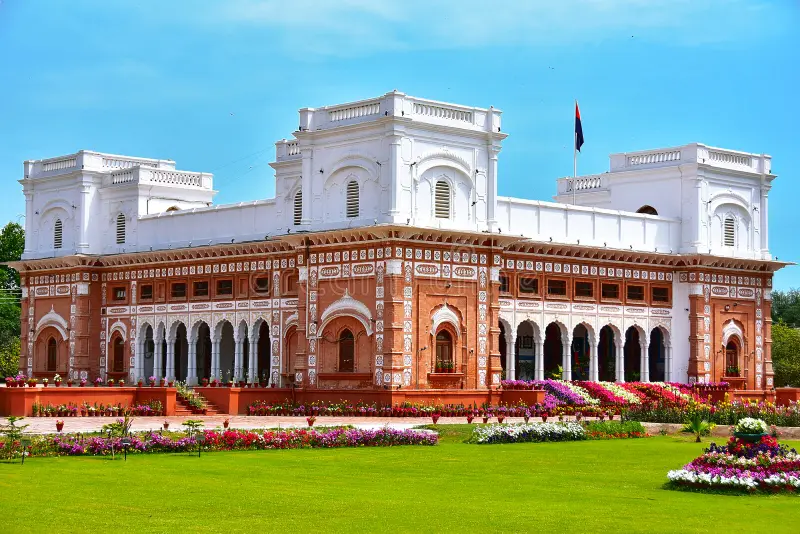
In the early 20th century, the princely state of Bahawalpur was flourishing under the leadership of Nawab Muhammad Bahawal Khan V. It was a time of prosperity, cultural refinement, and ambitious architectural projects that would come to define the city’s royal identity. Amid this era of grandeur, construction began in 1905 on a new palace whose name would echo through history, Nishat Mahal (“نشات محل”).
History and Origins
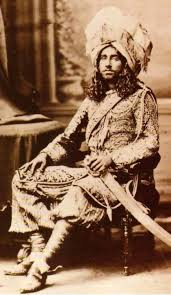
Nawab Bahawal Khan V conceived Nishat Mahal not merely as a building of brick and mortar but as the heart of domestic life within the sprawling Bahawalgarh Palace Complex. Its foundation was laid alongside companion structures such as Darbar Mahal and Farrukh Mahal, but Nishat Mahal had a distinct intent: it was envisioned as the principal domestic residence, where comfort, privacy, and refined family life could unfold away from the formal court and political ceremony.
Completed in 1911, Nishat Mahal was erected during years of relative peace and wealth for the state, a period when the Nawab invested generously in his city’s beauty and stature. Its creation represented not just royal ambition but an embodiment of princely life in its most elegant form.
Architecture That Tells a Story
Nishat Mahal is striking because it does not follow a single architectural tradition. Instead, it blends styles in a way that tells the story of a society at the crossroads of cultures:
- Indo-Saracenic elements hint at subcontinental heritage, with arches and forms that echo classical Islamic design
- Victorian and European touches, seen in decorative balustrades, fretwork jali screens, and a British-inspired marble fountain, reflect the era’s colonial influences and the Nawab’s cosmopolitan tastes
This hybrid aesthetic gives Nishat Mahal a unique character: regal yet gracious, ornate yet balanced.
The palace sits on a raised podium, with a central hall flanked by octagonal principal rooms rising boldly across two floors. Terraces and verandas open onto gardens that once linked the residence to other parts of the palace complex, creating a flow between private spaces and serene outdoor vistas.
Life and Legacy Within Its Walls
In its prime, Nishat Mahal was more than a residence; it reflected the daily rhythms of royal life, from refined social gatherings to quiet family moments. Though the palace was lavish, its design was rooted in domesticity rather than the formal spectacle of state functions. Careful planning ensured cool cross-ventilation, generous natural light, and elegant yet comfortable living spaces that suited the tastes of the era’s most distinguished household.
After the accession of Bahawalpur State to Pakistan in 1947, the palace, like much of the royal estate, underwent gradual shifts in use. For decades it hosted government offices and administrative functions. In 1966, control passed to the Pakistan Army’s 35th Infantry Division, and for many years Nishat Mahal remained within the restricted Bahawalpur Cantonment, inaccessible to the general public except on rare ceremonial occasions.
Why Nishat Mahal Matters
Today, Nishat Mahal stands as a living monument to Bahawalpur’s royal legacy, a rare physical link to the cultural aspirations of a bygone princely state. Its walls may be closed to most visitors, but its story still speaks of:
- A period of cultural confidence in southern Punjab
- The artistic synthesis of multiple architectural traditions
- The personal and domestic world of the Nawabs beyond formal court life
For travelers and history enthusiasts, Saiyah Travels offers guided tours to Nishat Mahal and other royal Bahawalpur palaces, providing an authentic experience of this heritage. Visitors can explore the beauty, serenity, and historical richness of Nishat Mahal while learning about the Abbasi dynasty and the lifestyle of the royal family.
Nishat Mahal does not just tell us what grandeur looked like; it shows us how royalty lived and felt in an era when art, architecture, and daily life were inseparable
Frequently Asked Questions – Nishat Mahal Bahawalpur
What is the history of Nishat Mahal in Bahawalpur and when was it built?
Nishat Mahal was constructed between 1905 and 1911 during the reign of Nawab Muhammad Bahawal Khan V as part of the Bahawalgarh Palace Complex in Bahawalpur.
Who built Nishat Mahal and what was its original purpose?
Nawab Bahawal Khan V commissioned Nishat Mahal as the principal domestic residence for the royal family, designed for private living rather than formal court ceremonies.
What architectural style is used in Nishat Mahal Bahawalpur?
The palace reflects a blend of Indo-Saracenic and Victorian architectural styles, combining Islamic arches, European balustrades, jali screens, and colonial-era decorative elements.
How is Nishat Mahal different from Darbar Mahal and Farrukh Mahal?
Unlike Darbar Mahal, which was used for official state functions, Nishat Mahal served as a private residential palace focused on royal family life and comfort.
Where is Nishat Mahal located in Bahawalpur?
Nishat Mahal is situated within the historic Bahawalgarh Palace Complex in Bahawalpur, Punjab, Pakistan, inside the cantonment area.
Is Nishat Mahal open to the public for visits?
Nishat Mahal is generally not open to the public as it is located within the Bahawalpur Cantonment and under military administration.
What happened to Nishat Mahal after the accession of Bahawalpur in 1947?
After 1947, the palace was used for administrative purposes and later came under the control of the Pakistan Army’s 35th Infantry Division.
Why is Nishat Mahal important in Bahawalpur’s royal history?
Nishat Mahal represents the domestic life of the Abbasi Nawabs and stands as a symbol of early 20th-century architectural elegance in southern Punjab.
Can tourists explore Nishat Mahal as part of a Bahawalpur palace tour?
While direct access is limited, heritage tours in Bahawalpur provide historical insights into Nishat Mahal along with other royal landmarks in the city.
What makes Nishat Mahal unique among the palaces of Bahawalpur?
Nishat Mahal stands out for its residential purpose, architectural fusion of Eastern and Western styles, and its role in shaping the private royal identity of Bahawalpur State.